Bangladesh sets four priorities for climate action at UNGA
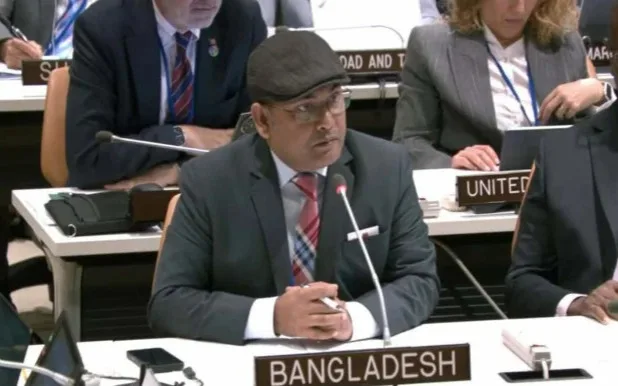
Bangladesh has called for a major shift in how climate-vulnerable countries receive finance, arguing that climate shocks are increasingly colliding with debt and development pressures. Speaking at the fourth Climate Vulnerable Forum Leaders Meeting in New York, Dr Saimum Parvez outlined four priorities Bangladesh wants advanced before COP31.
Reading
In a Nutshell:
- Saimum Parvez called for predictable, concessional and fair climate finance, with stronger representation for vulnerable countries in global decision-making.
- He backed the Vulnerability to Viability Compact and Lifeline Fund, including rapid financing for countries facing climate-related balance of payments stress.
- Bangladesh’s four COP31 priorities are an ambitious climate finance framework, full operation of the Loss and Damage Fund, reform of the global financial architecture, and greater use of the International Court of Justice advisory opinion on climate change.
- He said vulnerable countries should not have to divert spending from health and education to debt payments while dealing with climate shocks.
- Bangladesh also called for stronger international efforts to keep the 1.5°C goal within reach, while citing its target to cut emissions by 20 per cent by 2035 and generate 20 per cent of electricity from renewable sources by 2030.
Context
The CVF meeting brought together climate-vulnerable economies and development partners under the theme Development Reset and Cooperation. Its central initiatives are the V2V Compact and Lifeline Fund. The V2V Compact seeks to change how climate finance is structured and delivered, while the Lifeline Fund is moving into implementation as a mechanism for rapid liquidity after climate shocks. Bangladesh’s own NDC 3.0 puts the financing requirement for its 2026 to 2035 mitigation measures at $116.18 billion. Of that, $90.23 billion is expected from international climate finance, while $25.95 billion is identified as domestic support.
Why it matters
The financing issue is directly tied to Bangladesh’s climate commitments. Its NDC targets a 20.31% reduction in emissions by 2035, but 13.92 percentage points of that reduction is conditional on international support. That creates a concrete reason for Bangladesh to push for the kind of finance Parvez described. Bangladesh is being asked to make larger climate investments, while a substantial part of its planned emissions reduction depends on money coming from outside the country.
What we think
The argument is essentially about preventing climate spending from competing with development spending. Bangladesh is seeking financing that arrives on affordable terms and quickly enough after disasters, so a cyclone or flood does not leave governments choosing between repairing climate damage and maintaining spending on health, education and other basic needs. The four COP31 priorities also show where Bangladesh wants the debate to go next: from general promises of climate support to the design of the money itself, including how much is concessional, how quickly loss-and-damage payments arrive, how debt pressures are handled, and how climate obligations are enforced.