Bangladesh signs CEPA with South Korea, securing preferential access for 97% of goods
Bangladesh and South Korea signed a Comprehensive Economic Partnership Agreement to expand trade and investment ties. The deal gives preferential market access to most goods traded between the two countries.
Reading
In a Nutshell:
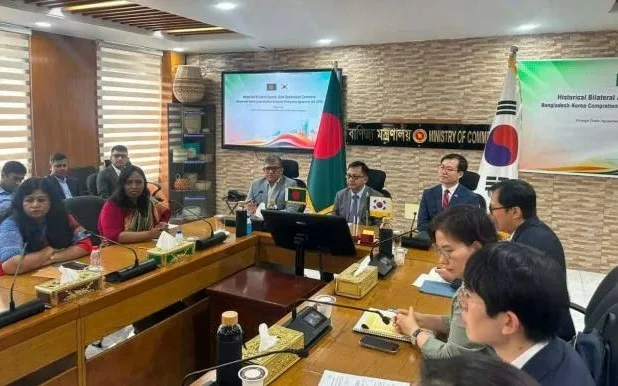
- Bangladesh and South Korea signed CEPA in Dhaka with Commerce Minister Khandakar Abdul Muktadir and South Korean Trade Minister Han Koo Yeo announcing the deal.
- The agreement gives preferential market access to 97 percent of Bangladesh’s goods in South Korea and 87 percent of South Korean goods in Bangladesh.
- Bangladesh exported $421 million worth of goods to South Korea in FY2025 to 26, while importing $1.2 billion in FY2024 to 25, leaving a trade deficit in South Korea’s favour.
- The deal comes as Bangladesh seeks to strengthen trade ties and secure market access ahead of its LDC transition which remains uncertain with the government requesting a three year extension of its graduation timeline beyond 2026.
Why it matters
Bangladesh has been preparing for the end of its LDC trade privileges by trying to secure new trade agreements that can protect export competitiveness. CEPA gives Bangladeshi products preferential access to 97% of South Korea’s goods market, which could help expand exports beyond traditional markets. Bangladesh has also historically run a trade deficit with South Korea, exporting $421 million worth of goods in FY2025 to 26 while importing $1.2 billion worth of goods in FY2024 to 25. The agreement could help narrow that gap by improving market access for Bangladeshi exporters and attracting more investment. It also comes as Bangladesh tries to build stronger economic links with major Asian economies after signing an EPA with Japan earlier this year.
What we think
CEPA gives Bangladesh a chance to increase exports, but the agreement alone will not fix the problems that have limited Bangladeshi businesses from fully benefiting from trade deals. Bangladesh’s trade relations with India already shows the same pattern. Despite growing calls for stronger economic ties through border industries, BBIN connectivity and energy cooperation, Bangladesh imported $9.62 billion worth of goods from India and exported only $1.76 billion in FY2024 to 25, leaving a $7.86 billion trade gap. For CEPA to work differently, Bangladesh will need to ensure exporters can actually enter the South Korean market, while partners address issues like market access, customs delays and other barriers that keep trade from becoming more balanced.