Bangladesh to Add 10 Airbus Jets to Biman’s Boeing Expansion
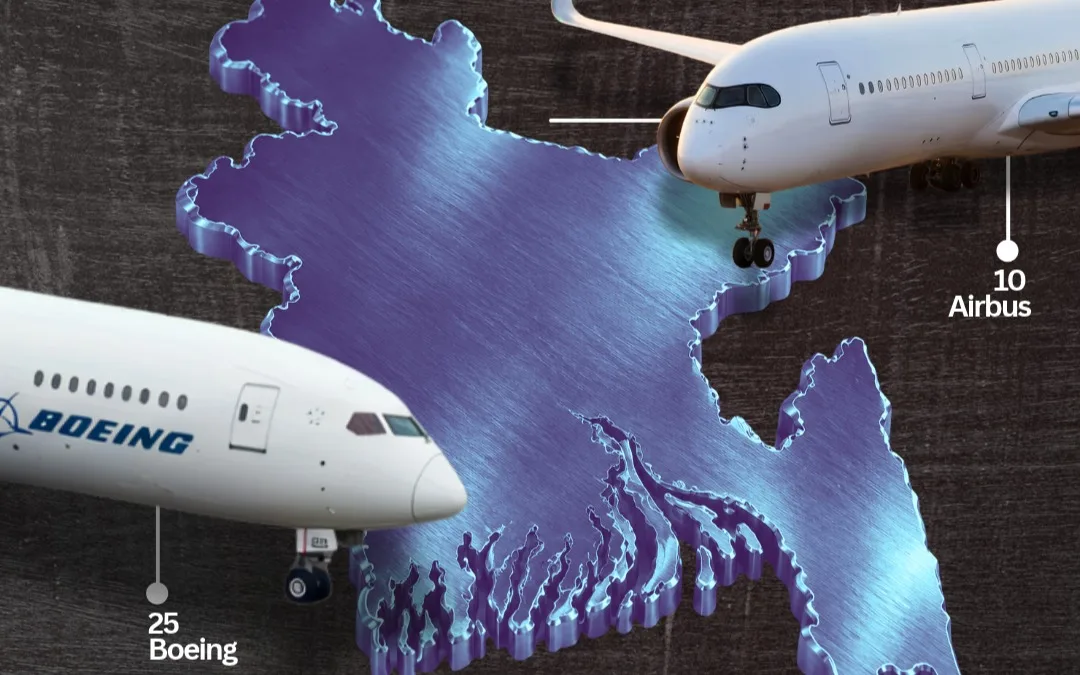
Bangladesh plans to sign a deal for 10 Airbus aircraft in October, adding a European order to the 25 Boeing aircraft Biman Bangladesh Airlines has agreed to buy this year. The purchases come as Dhaka expands Biman’s fleet while managing economic and diplomatic engagement with both the United States and the European Union.
Reading
In a Nutshell
- Aviation Minister M Rashiduzzaman Millat said Bangladesh will sign an agreement with Airbus in October to buy 10 aircraft for Biman.
- The Airbus package under negotiation includes four A350 900s and six A321neos, but the deal has not yet been finalised.
- Biman has agreed to buy 25 Boeing aircraft this year, including 14 in April and another 11 in September.
- The first of the 25 Boeing aircraft is expected to arrive in 2031, with deliveries from the April order scheduled through October 2035.
Context
Biman’s Boeing expansion began with a $3.7 billion agreement signed in April for 14 aircraft, comprising eight 787 10s, two 787 9s and four 737 8s. The September agreement added five 787 10s and six 737 8s, bringing the total to 25. The new aircraft will largely fit Biman’s existing Boeing fleet, which already includes 787, 777 and 737 Next Generation aircraft.
Airbus has remained part of the fleet plan alongside Boeing. Its revised proposal covers 10 aircraft, four A350 900s and six A321neos, and the government now plans to sign that deal in October. EU Ambassador Michael Miller had earlier described Airbus’s offer as “incredibly competitive” and called for a level playing field in public procurement.
Why It Matters
The two deals give Biman a much larger future fleet while also providing Bangladesh with commercial links to both sides of the Atlantic. Boeing’s orders have come amid closer US-Bangladesh economic engagement, while Airbus is being considered as Europe presses Dhaka for more open and predictable procurement and investment conditions.
But the two deals are at different stages. The 25 Boeing aircraft are already contracted, while the 10 Airbus aircraft are still expected to be agreed upon in October. That means the Airbus purchase currently carries a diplomatic signal, but its final commercial terms, including price, financing and delivery schedule, are yet to be settled.
What We Think
The procurement strategy shows that Bangladesh is not choosing either fleet over the other; both Boeing and Airbus deals are being pursued side by side. The result would be a much larger mixed fleet from both the US and Europe, helping Bangladesh maintain commercial links with Washington and Brussels. That balance is also visible in the timing of the two deals. The final Airbus deal will therefore show how far Bangladesh wants to pursue actual procurement, rather than leaving it at the level of diplomatic engagement. Lastly, these Boeing and Airbus deals show Bangladesh could become the next aviation hub in South Asia.