Escalating political violence in July: NCP-BNP clashes raise questions over grassroots accountability
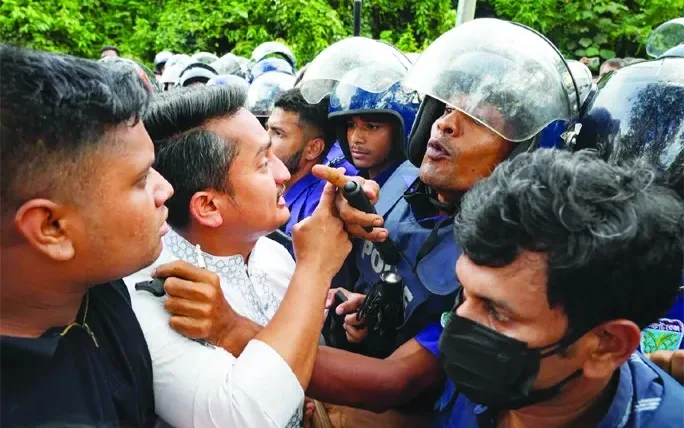
Clashes between BNP associate bodies and the NCP in Habiganj and Sylhet during July commemorations have intensified political tensions and sparked calls for accountability.
Reading
In a Nutshell:
- July 28: Alleged Chhatra Dal activists ambushed an NCP convoy in Habiganj. During the violent clash, 19-year-old Alif Chowdhury tragically lost his left eye, prompting NCP leaders to demand BNP accountability.
- July 29: Authorities imposed Section 144 in Habiganj. Police heavily blockaded incoming NCP MPs, leading to a rain-soaked sit-in protest, a formal police complaint against 111 individuals, and strong condemnation from Jamaat-e-Islami.
- July 30: Unrest shifted to Sylhet, where assailants hurled bricks and shattered windows of the NCP convoy. NCP leaders blamed BNP activists, an accusation local BNP leadership completely denied.
Why it Matters
The occurrence of these attacks during the commemorative month of July has become a focal point of criticism. For political observers, the clashes represent more than localized turf wars. The timing has prompted analysts to question how local political factions possess the audacity to physically assault the very figures who spearheaded the historic July uprising. This pattern of hostility has led critics to ask whether a tendency to dehumanize political opponents and marginalize new leadership still pervades the country's political landscape. By targeting the architects of the recent democratic movement, observers argue that local political actors are demonstrating a disregard for the sacrifices commemorated this month, opting instead for traditional tactics of intimidation.
What We Think
The recent attacks have shifted scrutiny toward Prime Minister and BNP Chairperson Tarique Rahman. Following the Habiganj incident, Sarjis Alam stated that Rahman must be held accountable if such violence reflects the current state of governance. Observers argue that the BNP’s silence raises two concerns: either the leadership is aware and implicitly tolerating grassroots violence against emerging rivals, or it is unaware—indicating a serious breakdown in political control and intelligence. In both cases, the party’s inability to restrain local actors calls into question its commitment to democratic stability.