Cabinet approves draft law to make enforced disappearance a crime
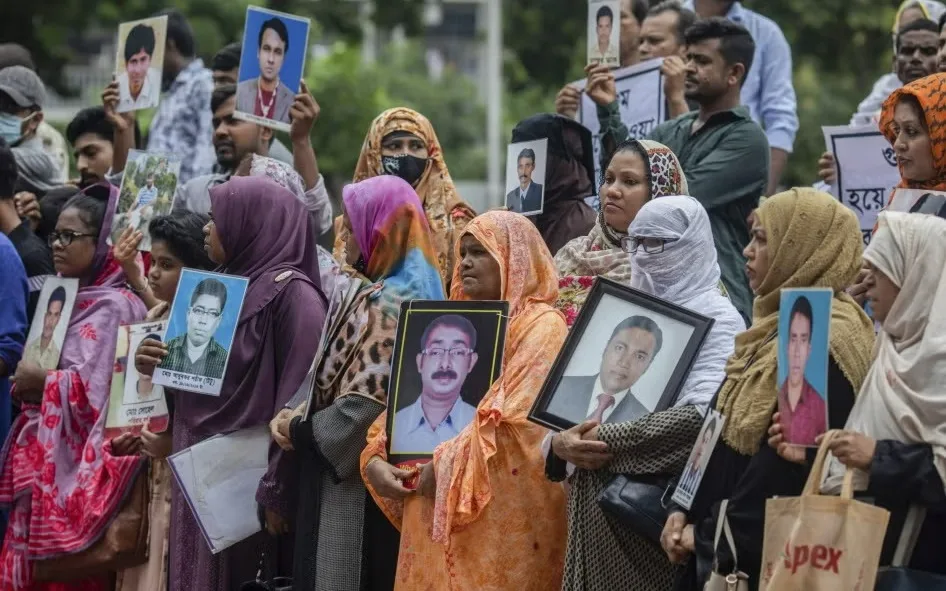
The Cabinet has approved the draft Enforced Disappearance Prevention and Remedy Act, 2026, which would make enforced disappearance a standalone criminal offence in Bangladesh. The draft comes amid renewed attention on disappearance allegations, including a case highlighted by Human Rights Watch involving a fisherman in the Sundarbans.
Reading
In a Nutshell:
- The Cabinet approved the draft Enforced Disappearance Prevention and Remedy Act, 2026, which will make enforced disappearance a standalone criminal offence.
- The interim government had also prepared a draft law on enforced disappearance, but the BNP government did not pass it in April.
- The interim government used the National Human Rights Commission and UNHCR involvement to investigate enforced disappearance cases, while the new draft law places police at the centre of investigations. The proposed law would make enforced disappearance a cognizable, non bailable and non compoundable offence under Bangladeshi law.
- The draft allows cases against government linked actors, security forces, or anyone acting with state support.
- The law proposes penalties ranging from death sentences to 3 years minimum imprisonment and 50 lac taka fines in enforced disappearance cases.
Why it matters
The law comes after years of allegations that the Awami League regime used enforced disappearance as a tool to suppress opposition leaders, activists and critics. The larger purpose of this law is to ensure that enforced disappearance cannot continue to be used as a way to silence political opposition in Bangladesh. For victims and their families, the proposed law could create a legal path to investigate cases, prosecute those responsible, and receive compensation and rehabilitation.
What we think
The law is meant to ensure state authorities cannot carry out extrajudicial killings or enforced disappearances without accountability, but a major concern is that it places police at the centre of investigations instead of involving an independent body like the National Human Rights Commission and UNHCR during the interim government’s process. Two weeks ago, Human Rights Watch said Bangladesh saw its first alleged enforced disappearance after the Awami League regime, referring to an April incident involving a fisherman in the Sundarbans. Witnesses said Coast Guard members took him away in a speedboat in broad daylight. When his family went to the Coast Guard office, they were told he was involved in an operation, but a few hours later officers said they had never heard of him. The main loophole in the newly passed draft is that the same state agencies that are accused of involvement in enforced disappearances can be investigated by other police officers-in-charge, creating room for foul play. The government will have to ensure these cases are investigated independently and transparently, because without that, a new law may exist on paper while victims and families continue to struggle for answers.