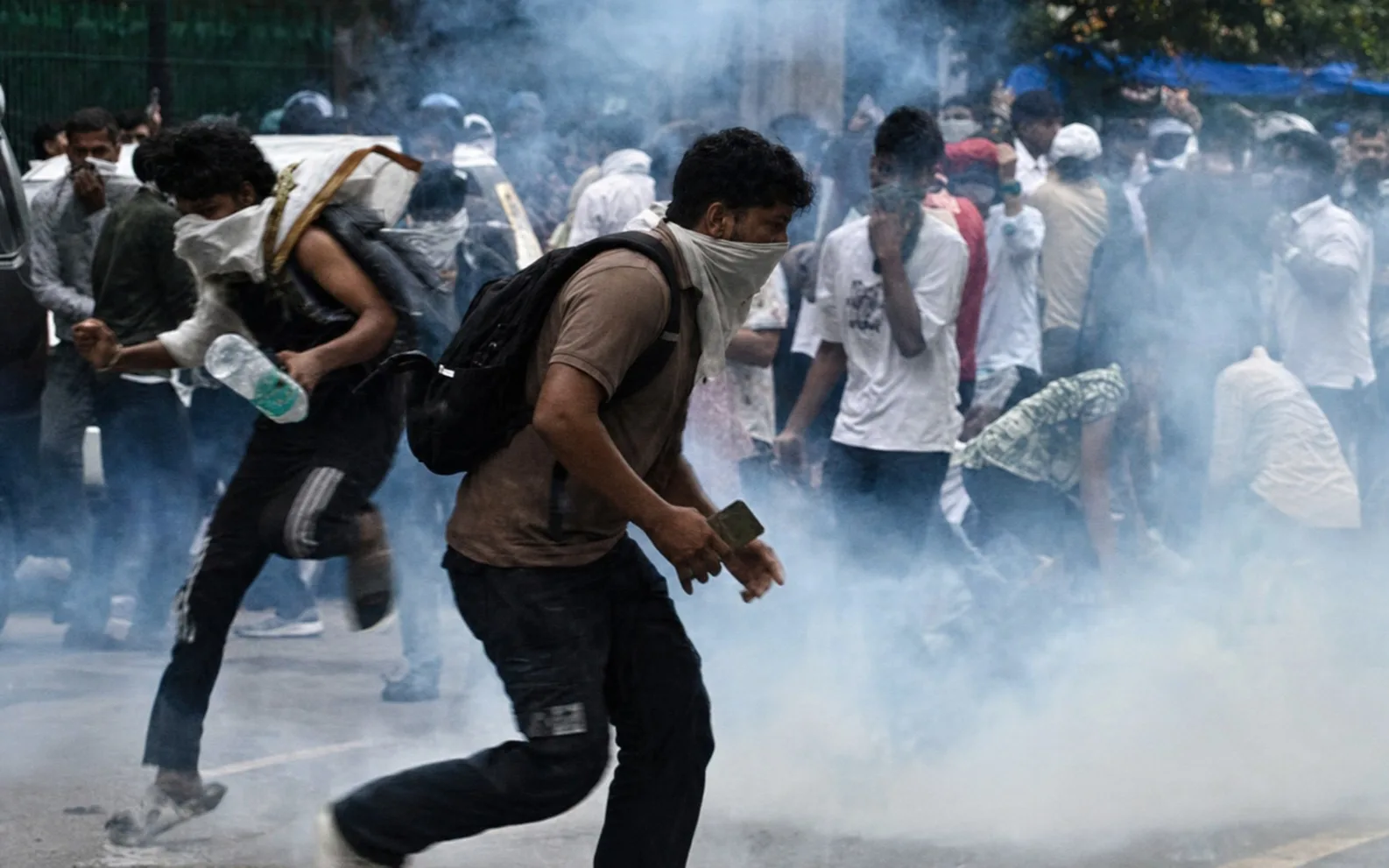
Tear gas shells fired at CJP protesters during Parliament march after founder Abhijeet Dipke is "picked up" by Delhi Police
CJP’s Chalo Sansad march in Delhi turned violent as protesters demanding action over the alleged NEET UG 2026 paper leak clashed with police. Police used tear gas and lathi charge, while CJP founder Abhijeet Dipke was detained.
Reading
In a Nutshell:
- Police used tear gas and lathi charge to disperse protesters.
- CJP founder Abhijeet Dipke was detained during the protest.
- CJP presented three demands, including Pradhan’s resignation; ₹1 crore for families of NEET aspirants who died by suicide, and the release of Sonam Wangchuk.
Why it Matters
The Indian government and Education Ministry face increasing pressure over their administrative failures in this year’s NEET UG medical exams. Today’s march targeted Education Minister Dharmendra Pradhan over allegations of a NEET UG 2026 paper leak. For students deeply affected by the NEET exam cancellations, CJP represents a movement that is calling out the government’s ineptitude and holding them accountable.
What We Think
A protest over exam reforms has now become a test of how the government handles public dissent. When students and activists raise demands tied to education failures, responding with tear gas, batons, and detentions instead of meaningful engagement risks deepening public anger instead of addressing the issues behind the movement. Any allegations of crimes against humanity would require legal scrutiny, but using force against protesters with reform demands raises serious questions about state accountability.