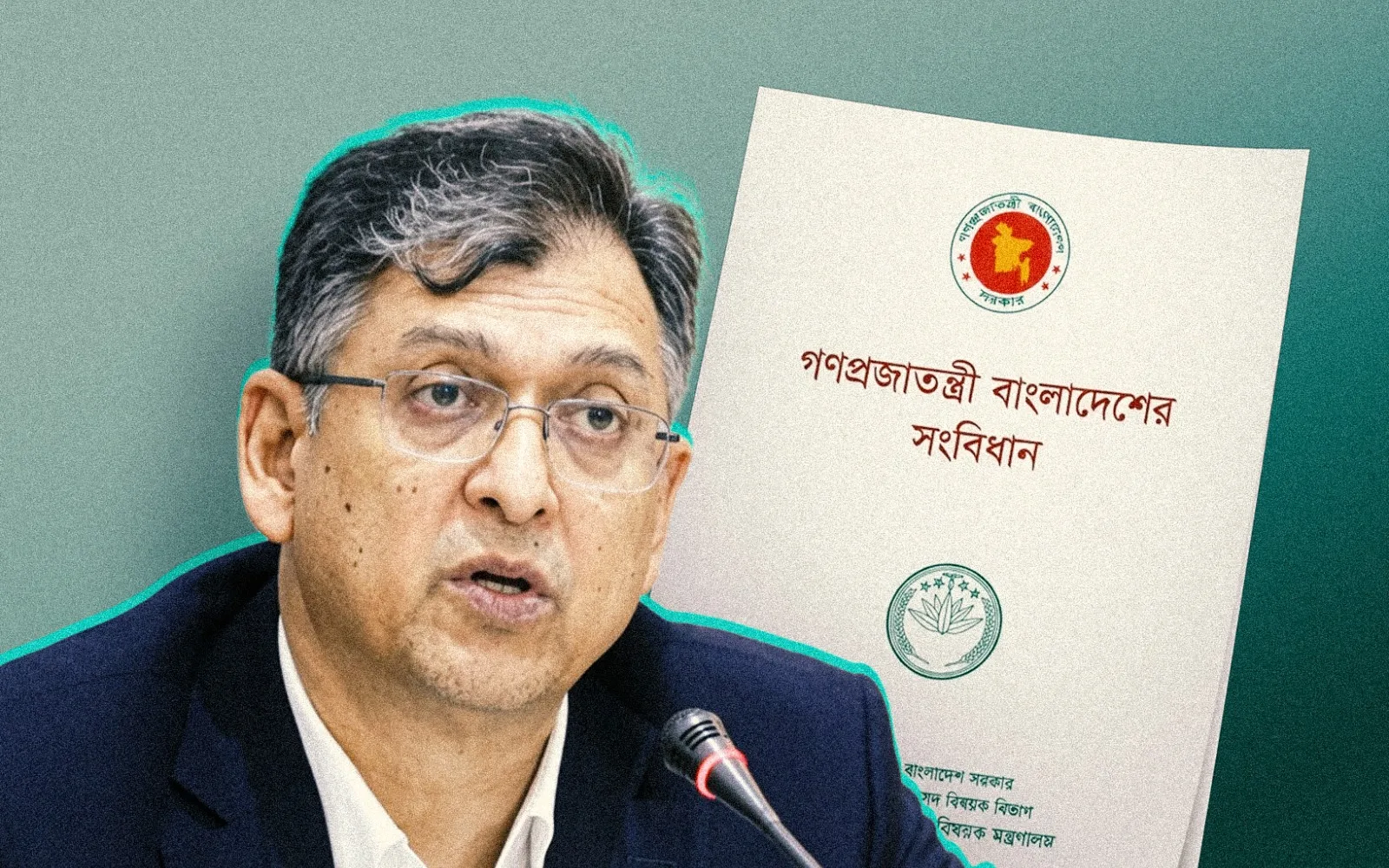
Constitution amendment committee holds first meeting, begins work on reform proposals
Proposed constitutional changes include recognising Ziaur Rahman’s Liberation War role and his independence declaration from Kalurghat Betar Kendra as then Major Zia, while removing Sheikh Mujibur Rahman’s “Father of the Nation” status, references to his 7 March speech and 26 March declaration, and the requirement to display his portrait.
Reading
In a Nutshell:
- The 12 member parliamentary special committee on constitutional amendments held its first meeting today under Home Minister Salahuddin Ahmed to prepare recommendations for changes to the Constitution.
- The committee includes ministers, state ministers and lawmakers from the ruling side, while opposition parties have not nominated any representatives despite being invited to join.
- Proposed constitutional changes include recognising Ziaur Rahman’s Liberation War role and his independence declaration from Kalurghat Betar Kendra as then Major Zia, while removing Sheikh Mujibur Rahman’s “Father of the Nation” status, references to his 7 March speech and 26 March declaration, and the requirement to display his portrait.
- The committee was formed on 13 July with a mandate to recommend necessary constitutional amendments, but it has not set a deadline for submitting its report or finalised how it will handle July National Charter proposals.
- The July National Charter followed nine months of talks through the National Consensus Commission and included 30 agreed constitutional reform proposals, with implementation planned through a referendum and a Constitutional Reform Council after the election. It received support from around 60 percent of voters in a referendum.
- The Charter proposed a bicameral parliament with a 100 member upper house elected through proportional representation, while the current process has begun through a parliamentary committee instead.
Why it matters
The 12 member parliamentary special committee on constitutional amendments has formally launched the government's effort to rewrite parts of Bangladesh's Constitution. Chaired by Home Minister Salahuddin Ahmed, the committee is now working on its methodology, work plan, and timeline before preparing recommendations for parliament. One of its biggest decisions will be what happens to the July National Charter, a document containing constitutional reform proposals agreed during the interim government's tenure that now remains in limbo. The process is moving forward without opposition participation after rival parties refused to nominate representatives, arguing that the BNP has abandoned the reform roadmap they previously agreed to. By pushing ahead with changes to the country's governing framework under these circumstances, the government risks widening political divisions instead of building the consensus that constitutional reform was originally meant to achieve.
What we think
The government’s current reform process does not follow the path set out in the July Charter, which proposed forming a Constitutional Reform Council after a public referendum to carry out agreed changes. The Charter came from months of talks between political parties, was signed by them, and was approved by 60 percent of voters. It also proposed a bicameral parliament with stronger checks on constitutional amendments. The new 12 member committee, however, has no opposition representatives and will now prepare recommendations for constitutional changes. By leaving out one side of the political divide, the committee weakens the consensus based process that the July Charter was meant to create and gives the government greater control over deciding the direction of constitutional reform.