Dhaka’s Old Buses Get a Cosmetic Makeover but Safety Concerns Remain
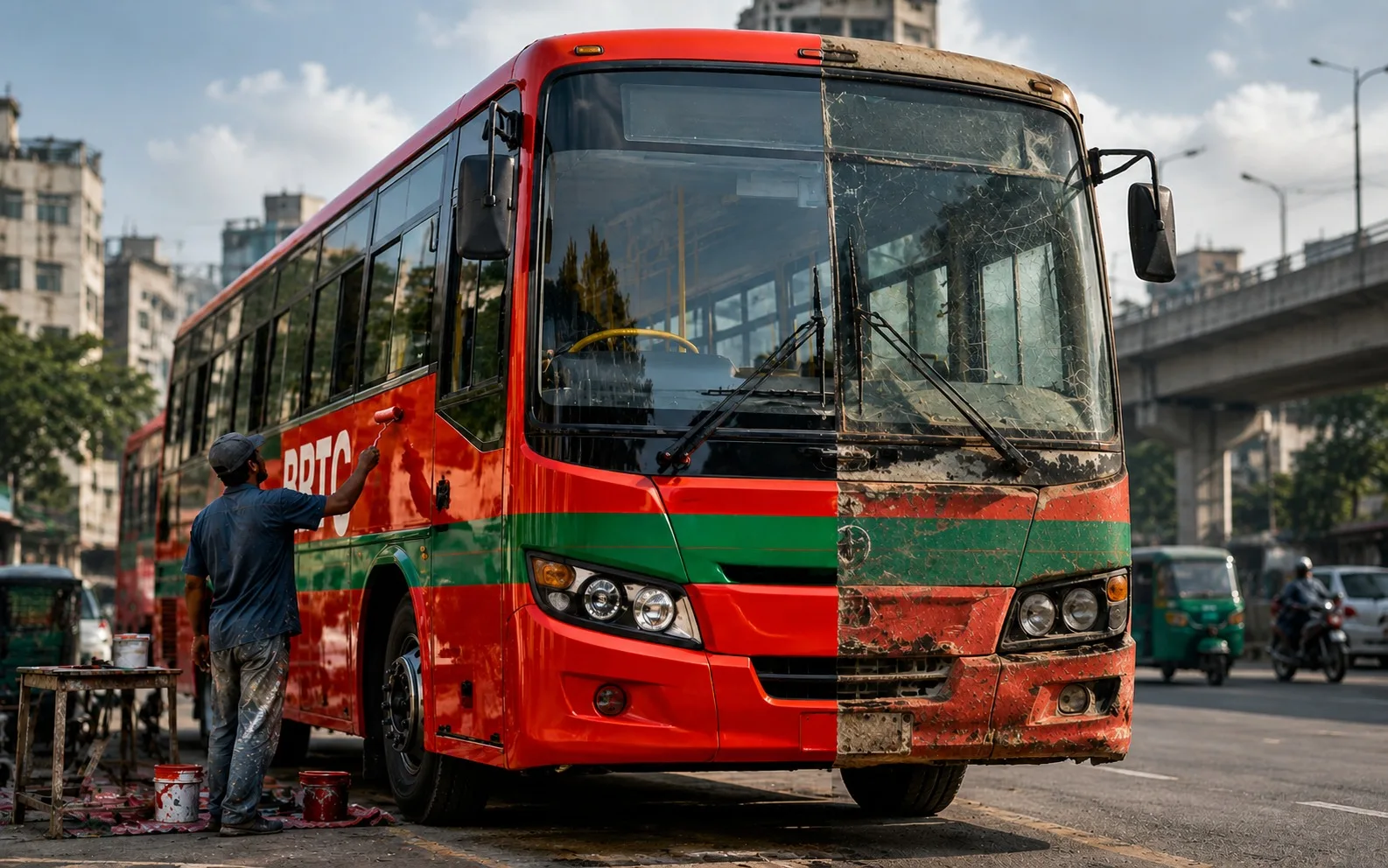
Old buses are again getting a cosmetic makeover in Dhaka, with workshops repainting and repairing their exteriors as the government encourages operators to improve existing vehicles. The approach has a clear precedent, but recent crashes involving buses without valid fitness certificates show why a fresh appearance cannot establish whether an ageing vehicle is safe to return to the road.
Reading
In a Nutshell:
- Workshops in Matuail are repainting and carrying out exterior repairs on ageing buses and trucks.
- Transport Minister Shaikh Rabiul Alam has encouraged owners to improve existing buses through denting and painting instead of replacing the fleet at once.
- Mechanics have previously reported old buses receiving body repairs while major engine problems were dealt with through temporary fixes.
- Bangladesh has set a 20 year economic life for buses and minibuses, with BRTA finding 39,169 buses and minibuses beyond that limit in its 2025 enforcement drive.
Context
The government has used repainting before as part of efforts to reorganise Dhaka’s bus system. In February 2025, around 2,610 buses were painted pink for a proposed counter based ticketing system. Passenger groups questioned why some 20 to 40 year old buses were being repainted instead of replaced, and the ticketing system later failed to take hold. The current plan is less focused on replacing the fleet. Rabiul has said existing buses can be improved through denting and painting while the government introduces route colours, designated stops and a more organised ticketing system.
Why It Matters
The concern is whether the mechanical work matches the new exterior. Mechanics in Savar reported in March that old buses were receiving body repairs while some continued to operate with temporary engine fixes and cheaper replacement parts. Recent crashes show the consequences of weak enforcement. A BRTC bus that killed five people in Faridpur in May had been running without a fitness certificate for two years. A bus that killed six people on the Dhaka Mawa Expressway in December 2024 had also been operating without fitness clearance, while its driver had reportedly warned the owner about brake problems.
What We Think
Refurbishing old buses can be practical when replacing the fleet takes time and money, but it needs to be done in line with safety standards. Bangladesh already has a 20 year economic life rule and a separate fitness certification system, yet buses continue to operate after falling outside those requirements. The current drive therefore needs to distinguish between improving the appearance of ageing buses and bringing them up to standard. If the latter happens alongside the paintwork, refurbishment can be part of a workable transition. If it does not, the exercise risks giving vehicles a new appearance without addressing the regulatory problems that have kept them on the roads.