What if Dhaka finds room to grow?
- From Tejgaon road dividers to Korail’s lake edge, small-scale urban gardening is showing how neglected spaces can produce food, add greenery and build local resilience - The fifth installment of a Nutshell Today series called “What if”
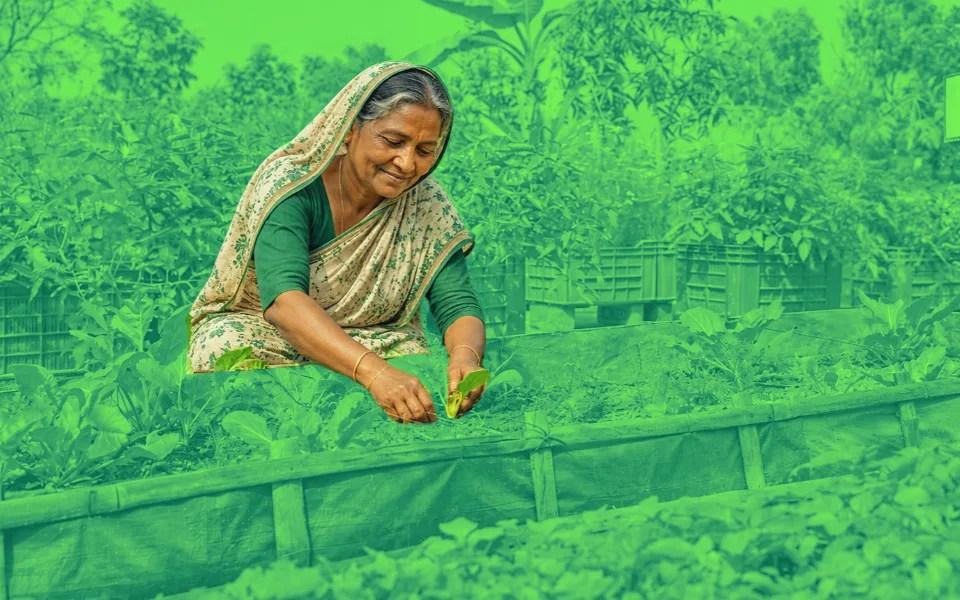
In the middle of traffic and concrete, a road divider is growing pui shak, pumpkin, data shak, kochu, chilli, okra, spinach, lal shak and mashkalai. The people behind it are not part of an NGO or municipal gardening programme. Local rickshaw-garage owners, tea-stall operators and security guards have divided up the available space and are cultivating it partly for their own use.
It is tiny. It will not feed Tejgaon, much less Dhaka. Nor will a strip of vegetables change the temperature of a megacity. But the unlikely garden raises a larger question: what if spaces like this stopped being exceptions?
Dhaka genuinely has an urban-heat problem. A peer-reviewed 2024 study using meteorological data from 1995-2019 found that Dhaka’s urban heat island intensity increased by 0.21°C per decade. The average urban-rural temperature difference was 0.48°C, while the average daily maximum difference reached 2.15°C.
At the same time, recent research suggests that growing food inside the city can make a modest difference to household diets and spending.
A 2025 study followed 425 households that received gardening training and inputs and 254 control households across metropolitan Dhaka. Participating households grew more varieties, harvested more frequently and shared more food. Among them, 89% shared garden produce with neighbours, while households spent about $108 less a year on fruit and vegetables even as consumption increased.
Another study, published in 2026 and based on 1,320 Dhaka households, found rooftop gardeners consumed 19% more vegetables and 7% more fruit than comparable non-gardeners with rooftop access. Women managed 83% of the gardens studied.
So could community gardens address both problems?
Urban designer Tanzil Shafique, project co-lead of ReWET and assistant professor of urban design at the University of Sheffield, says the answer requires recognising that not all urban gardening is the same.
A private rooftop garden, he says, is very different from Korail residents cultivating a lake edge or people growing vegetables informally on unused public land. Ownership, access, labour, risk and purpose are different.
He broadly divides Dhaka’s urban gardening into household gardening, community cultivation and informal food-growing on leftover urban land.
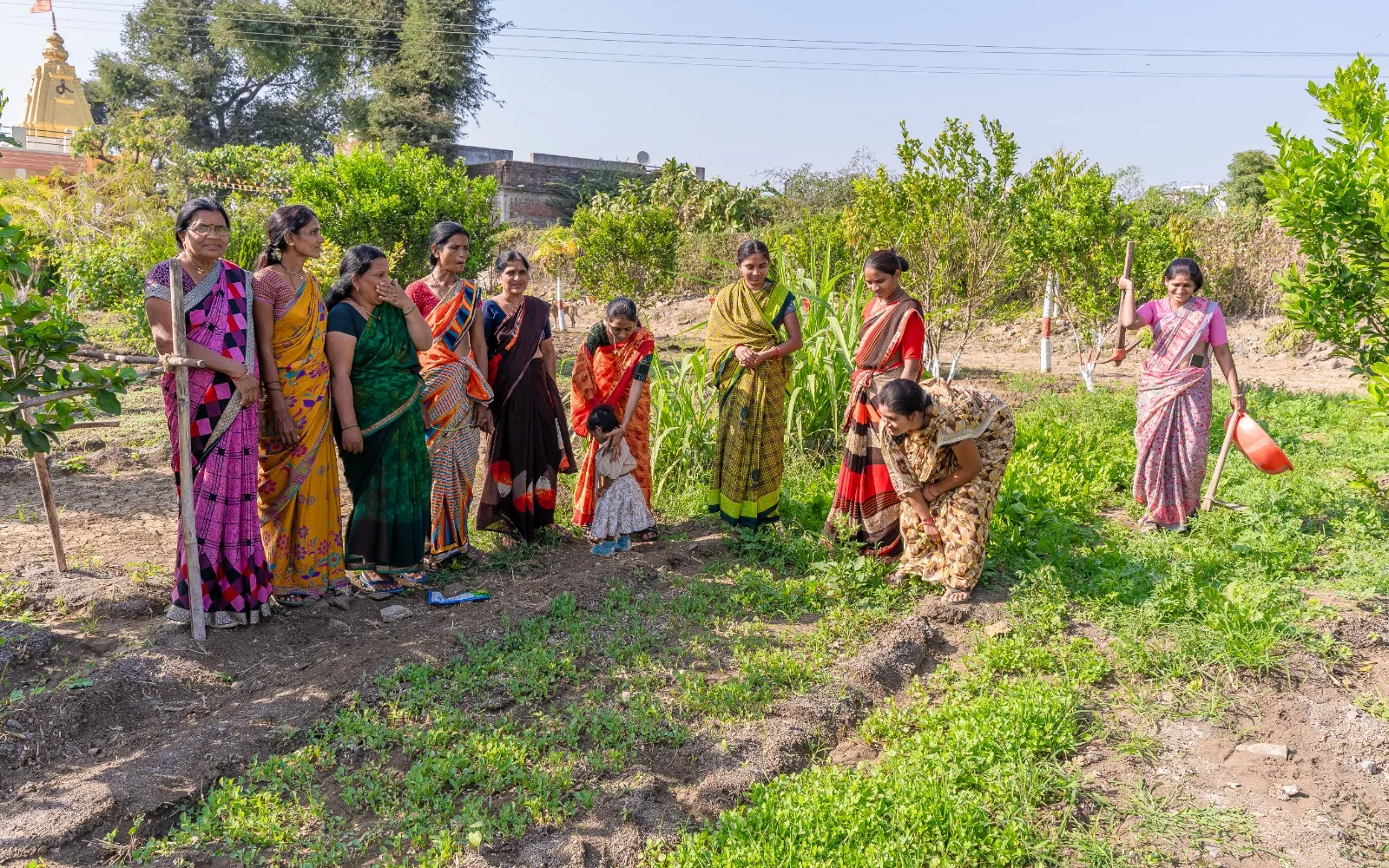
Around Korail, ReWET is working on what Shafique calls “community-led agroecological stewardship” – where food production is combined with caring for damaged land and water.
More than 50 households have been involved in agroecological cultivation in and around Korail, while more than 100 residents have participated in the wider ReWET process. Around 100 community stewards have received training.
The 2026 demonstration covers roughly 150 feet of the lake edge and includes 16 floating wetland units, around 100 trees, four compost pits and about 1,000 fishlings.
Residents, including women with existing food-growing knowledge but little access to land, cultivate vegetables and fruits primarily for household and community use.
But Shafique cautions against overstating what this means for food security.
“Urban gardening is not going to feed Dhaka,” he says.
Instead, he describes it as “supplementary food infrastructure”.
Growing leafy vegetables, gourds, herbs and other frequently consumed foods can reduce part of a household's recurring expenditure and improve access to fresh produce. For lower-income households, even relatively small savings can matter.
The 2026 study supports part of that argument. It also found strong social effects: 86% of gardeners shared produce with relatives or neighbours, while 90% reported greater social interaction with neighbours.
Cooling, but at what scale?
The heat argument needs even more caution.
Vegetation provides shade and releases moisture into the air, while replacing exposed concrete changes how much heat a surface absorbs and releases. But that does not mean one vegetable patch cools a neighbourhood.
“The argument should be cumulative rather than magical,” Shafique says.
The argument should be cumulative rather than magical.
The strongest effects, he says, are extremely local – on a roof, courtyard, garden, street edge or its immediate surroundings.
“A hundred disconnected pots will not solve the urban heat island.”
What could matter more is a connected system combining trees, gardens, wetlands, shaded streets, water bodies and green roofs.
For Dhaka, Shafique argues, this makes protecting lakes and wetlands particularly important. Productive gardens can form one part of that blue-green network rather than substitute for it.
Who actually gets to garden?
There is also an equity problem.
Rooftop gardening sounds obvious in a dense city until one asks who controls the rooftop.
Shafique puts the issue simply: “Dhaka cannot build an equitable urban-agriculture strategy around the assumption that everyone has a roof.”
That is why cultivation in places such as Korail – or even informal experiments such as the Tejgaon divider – raises a different possibility: giving people access to shared urban land.
Municipalities and public agencies, Shafique suggests, could allow communities to cultivate appropriate land through stewardship agreements rather than transferring ownership.
Schools, public institutions and housing developments could also provide cultivation areas. Shared nurseries, composting, water infrastructure and seed banks could support people who have knowledge and labour but no land of their own.
But not every vacant space should become a vegetable patch.
Soil beside heavily trafficked roads can be contaminated. Irrigation water may be polluted. Wetlands have ecological functions that food cultivation should not replace.
The 2025 Dhaka study also warns that contaminated soil or water could expose urban-grown vegetables to heavy metals or pathogens, although it notes there is not yet evidence showing that vegetables grown in Dhaka are more contaminated than produce coming from rural areas.
Shafique says Dhaka therefore needs a basic framework asking three questions: where can food be grown safely, where should ecology be restored, and where should neither be done?
Planting is the easy part
“The main lesson is that planting is the easy part,” Shafique says of ReWET's experience.
Six months later, someone must still water the plants, replace damaged ones, resolve conflicts and pay for repairs.
Local ownership is essential, but he warns that “community ownership” should not become an excuse for government or funders to disappear. Communities still need water, seeds, soil, compost, tools, technical support and sometimes paid maintenance.
Land tenure presents another problem. Residents can spend years improving a public space and still have no guarantee it will not later be cleared or developed.
Shafique proposes formal stewardship rights rather than necessarily transferring ownership: multi-year agreements allowing communities to cultivate defined public spaces while setting rules on maintenance, ecology and public access.
If Dhaka wanted to move beyond scattered experiments, he suggests first mapping what he calls the city's “cultivable commons” – suitable rooftops, schools, institutional grounds, lake edges and public sites – while excluding polluted or ecologically sensitive areas.
The city would then need a municipal stewardship framework and basic support systems such as soil testing, compost networks, nurseries, training and water access.
Community gardens will not solve Dhaka’s food insecurity. Nor will they reverse decades of urban heating, replace disappearing wetlands or compensate for poor housing and dysfunctional food systems.
“One relatively simple practice can produce several modest benefits simultaneously,” Shafique says.
Those benefits can range from producing some fresh food and reducing household expenses to adding greenery, supporting biodiversity, encouraging composting and giving residents a greater role in caring for neglected urban spaces.
A city that got it right: How Rio scaled community gardening
- Rio de Janeiro has turned community gardening into a formal city programme through Hortas Cariocas, which supports food-growing on public land and in municipal schools.
- In November 2025, the city opened a new community garden in Sepetiba, covering 4,652 square metres with 194 planting beds and an estimated capacity to produce six tonnes of food a year.
- By then, Hortas Cariocas had grown to 53 active community gardens and 30 school gardens, reaching more than 20,000 students and benefiting around 3,600 families in 2025. The programme also involved about 300 gardeners and supplied produce to 46 schools.
- Rio is now expanding the model further. In June 2026, work began on a three-kilometre urban garden in Madureira, with plans for a producers’ market and environmental education centre alongside the growing areas.
- Rio’s experience shows how scattered urban gardens can become part of a wider municipal system when communities are given land, technical support and long-term institutional backing.
Back in Tejgaon, the vegetable patch remains just that: a narrow strip of food growing amid traffic and concrete.
It will not feed Tejgaon. It will not cool Dhaka.
But it demonstrates something important. People are already finding ways to make small pieces of the city do more than one job.
The question now is whether those scattered acts remain exceptions – or whether Dhaka can make room for them to grow safely, equitably and as part of a much larger urban system.