Govt starts 30 kg rice distribution to low-income people for food security
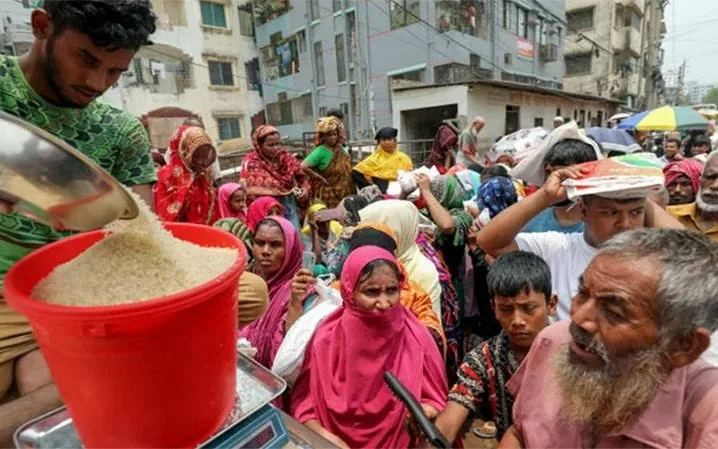
The government has started a new cycle of its Food Friendly Programme, introduced in 2016 to provide subsidised rice to low income households. The latest expansion will provide 55 lakh beneficiaries with 30 kg of rice monthly at Tk 15 per kg for six months.
Reading
In a Nutshell:
- The Food Friendly Programme was first launched in 2016 to provide subsidised rice to poor rural households during periods of lower income.
- The interim government expanded the programme in 2025 by increasing beneficiaries from 50 lakh to 55 lakh families and extending distribution from five months to six months.
- Under the latest cycle, 55 lakh card holding beneficiaries in 495 upazilas will receive 30 kg of rice monthly at Tk 15 per kg.
- The government is also distributing fortified rice to 25.29 lakh beneficiaries in 248 upazilas to improve nutrition among women and children.
Why it matters
When the interim government expanded the Food Friendly Programme last year, it signalled that existing support was no longer enough for many low-income families. The increase in both the number of beneficiaries and the length of support was an implicit recognition that a programme which has been around for nearly a decade needed to do more as food insecurity and affordability pressures continued. With the latest distribution, the government is betting its large food reserves can help ease that pressure, but success will depend on whether the extra support actually reaches those who need it. Since the dawn of the program back in 2016, it has undergone structural breakdowns, not once but twice. This can be a lesson for the new government to have proper regulation of the supply chain to refrain from allowing syndicates to feed off the benefits by looting the resources and selling them in open markets.
What we think
Expanding the programme will help families who are struggling to afford basic food, but subsidised rice cannot be the only long term solution. The government can provide relief through safety net programmes, but it also needs to address the wider pressures that keep pushing households to depend on cheaper rice in the first place. Ultimately, the success of this programme should not be measured by how many people it reaches, but by whether it helps enough families to cope while the government works on addressing the reasons behind food insecurity.