India Says Ganges Treaty Talks with Bangladesh Continue Ahead of Expiry
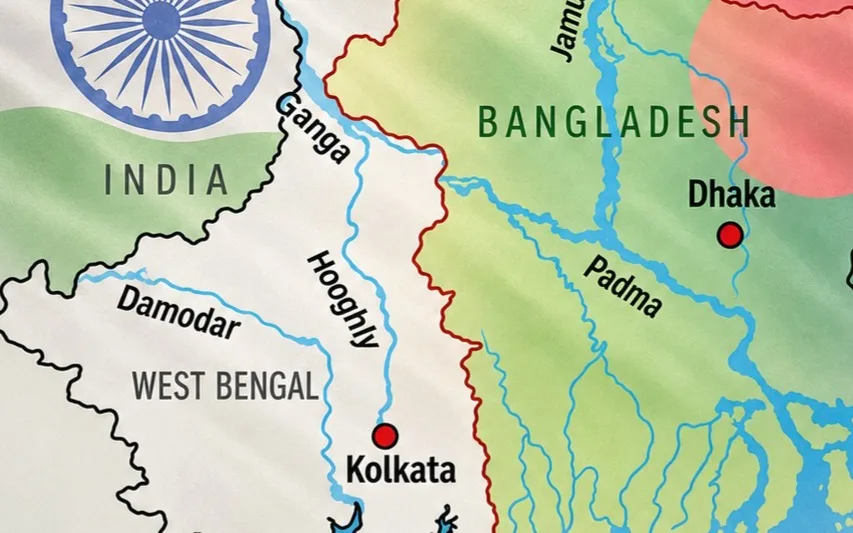
India says discussions on the Ganges water-sharing treaty and other shared rivers with Bangladesh remain active through the Joint Rivers Commission (JRC), alongside continuing technical-level meetings.
Reading
In a Nutshell
- India says discussions on the Ganges water-sharing treaty and other shared rivers with Bangladesh remain active through the Joint Rivers Commission (JRC), alongside continuing technical-level meetings.
- The 1996 Ganges Water-Sharing Treaty regulates dry-season flows at Farakka and is scheduled to expire in December 2026, while Bangladesh is seeking a new agreement with guarantee provisions.
- Bangladesh is seeking a new Ganges water-sharing treaty rather than a simple renewal, with guarantee clauses intended to protect its dry-season share.
- The two countries’ JRC is reportedly working on the proposed fresh agreement, while Bangladesh has also formed a technical committee and conveyed its position to India.
- India has not publicly confirmed a decision on whether to renew or enter into a new treaty; its stated position is that all Ganges and other shared-river matters will be handled through the JRC.
Context
The Ganges treaty is one of the central institutional arrangements in Bangladesh–India relations. Signed in 1996 for 30 years, it provides a framework for allocating dry-season Ganges water at Farakka and now approaches its December 2026 expiry. India and Bangladesh share 54 rivers, making the JRC the principal bilateral mechanism for water-related issues beyond the Ganges alone.
Why It Matters
The approaching expiry of the Ganges treaty turns a long-running water-management issue into a test of Bangladesh–India political confidence. The Ganges supports agriculture, fisheries, river navigation, ecosystems, and livelihoods in Bangladesh, especially during the dry season, when upstream withdrawals and low flows are most consequential.
For Bangladesh, river negotiations therefore operate in a relationship where the practical interdependence of trade, transit, energy, and water coexists with public sensitivity regarding sovereignty and fairness.
The negotiation outcome can shape not only water security but also public perceptions of whether bilateral institutions deliver equitable results. An agreement that is technically credible, transparent and responsive to climate-driven hydrological volatility can reinforce regional stability; an opaque or contested arrangement can amplify mistrust at a politically consequential moment.
What We Think
Bangladesh can treat the Ganges treaty transition as a water-security negotiation, anchored in verified dry-season flow data, joint hydrological modelling, climate variability, sedimentation and ecological-flow requirements. COP31 in Antalya, Türkiye, on 9–20 November offers a timely platform to link transboundary water management with Bangladesh’s wider agenda on adaptation, food security and climate finance.
Dhaka can seek continuity before the December deadline while pursuing a fuller review through the JRC. Expanding talks to real-time data sharing, basin research, river-health indicators and cooperation on other shared rivers can produce measurable commitments and reduce reliance on periodic political bargaining.