Jamaat Rejects Alliance, Forcing Partners To Contest Local Polls Alone
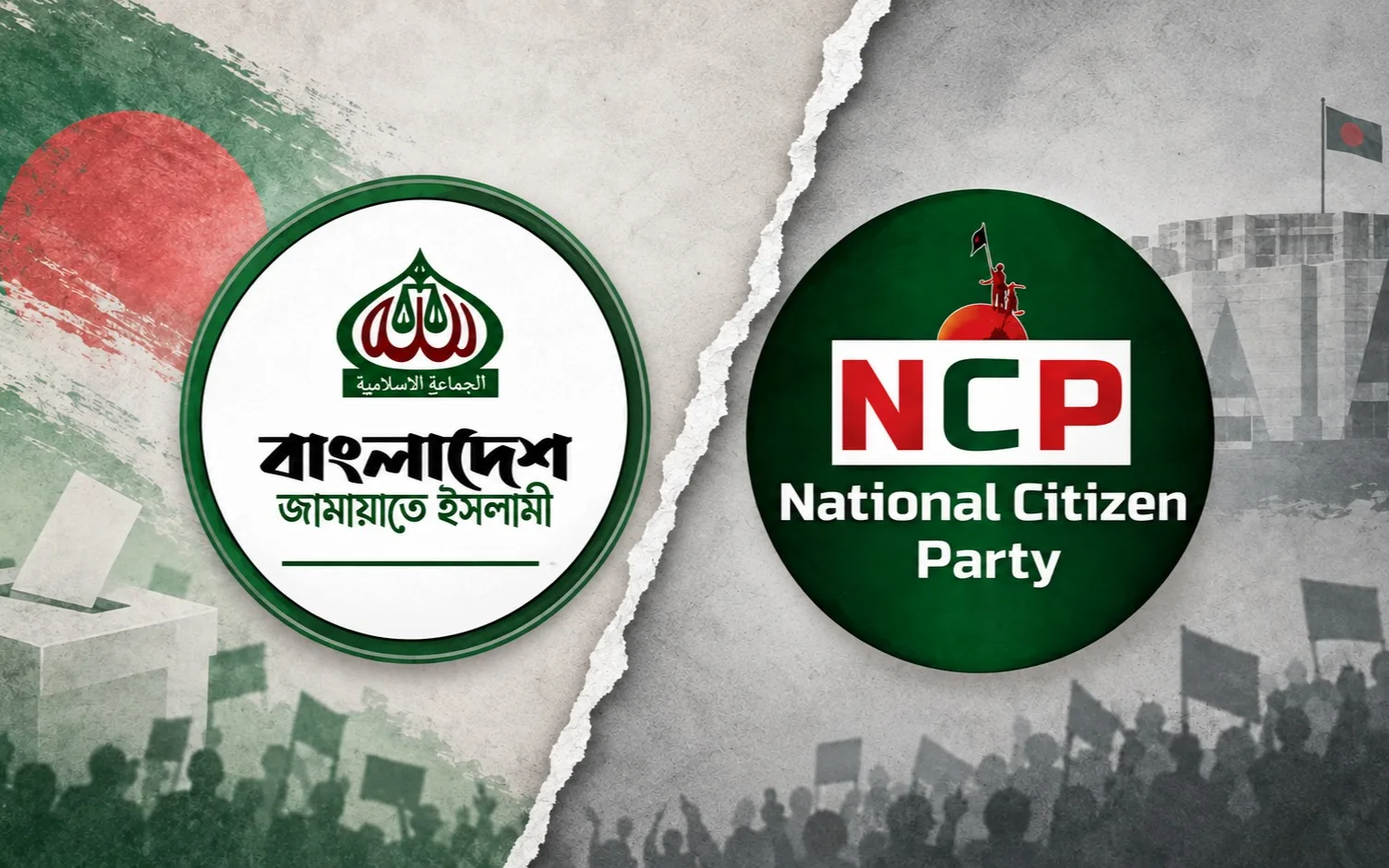
Bangladesh's 11-party alliance has abandoned plans for a joint seat-sharing arrangement in upcoming local government elections after Jamaat-e-Islami refused to run under a unified banner, forcing smaller allies to contest independently for the first time in roughly a decade.
Reading
In a Nutshell:
- Political parties have started ground-level preparations for local government elections, from union councils to city corporations, even though the official election schedule has not yet been finalized.
- Most parties in the 11-party alliance wanted to replicate their national election approach by dividing seats and contesting jointly without party symbols, but Jamaat's refusal has derailed that plan.
- Labour Party Chairman Mostafizur Rahman Iran said a joint alliance run carries risks, including mutual mudslinging among partner parties and exposure of organizational weaknesses within smaller parties.
- Bangladesh Khelafat Majlish Secretary General Jalaluddin Ahmed said his party and the NCP had favored a joint alliance approach from the start, but no official meeting has taken place with Jamaat on its decision to go solo.
- Jamaat Secretary General Mia Golam Parwar denied any prior agreement on joint candidacies for local polls, stating each party will field its own candidates independently, and noted Jamaat has historically always contested local elections alone even while in coalition.
Context
The 11-party alliance had jointly contested the national election, but local government polls operate differently since candidates traditionally run without party symbols, adding complexity to seat-sharing arrangements. Jalaluddin Ahmed suggested that despite Jamaat's stance, some negotiation may still emerge among the remaining parties, whether Jamaat eventually joins or not. The tension reflects a broader test of alliance cohesion outside the higher-stakes national election context, where unity is harder to enforce among ideologically varied partners.
Why it matters
Jamaat's decision to go solo weakens the bargaining position of smaller allied parties in local government seats, since they now compete without the combined organizational strength the alliance provided nationally. It also signals that alliance unity may have been more tactical than structural, holding together for the 2026 national vote but fracturing once localized, lower-profile contests are at stake. This could reshape local power dynamics in areas where smaller parties previously relied on alliance backing to compete against Jamaat's stronger grassroots network.
What we think
It is highly unlikely that the remaining ten parties will manage to form their own coalition without Jamaat at the helm, since the alliance has largely functioned around Jamaat's organizational muscle and leadership rather than as a coalition of equals. Jamaat has previously indicated that local elections serve a different purpose for the party, functioning as a test of its own dominance and grassroots organizational strength rather than an exercise in coalition-building. That divergence in objectives is widening the cracks within the alliance day by day, making a unified front increasingly difficult to sustain even among the remaining ten parties. The final decision may hinge on the yet-to-be-announced official election schedule, which could pressure parties into faster negotiations once dates are confirmed.