Graffiti from CJP protest removed as Jantar Mantar undergoes cleanup after 36-day protest
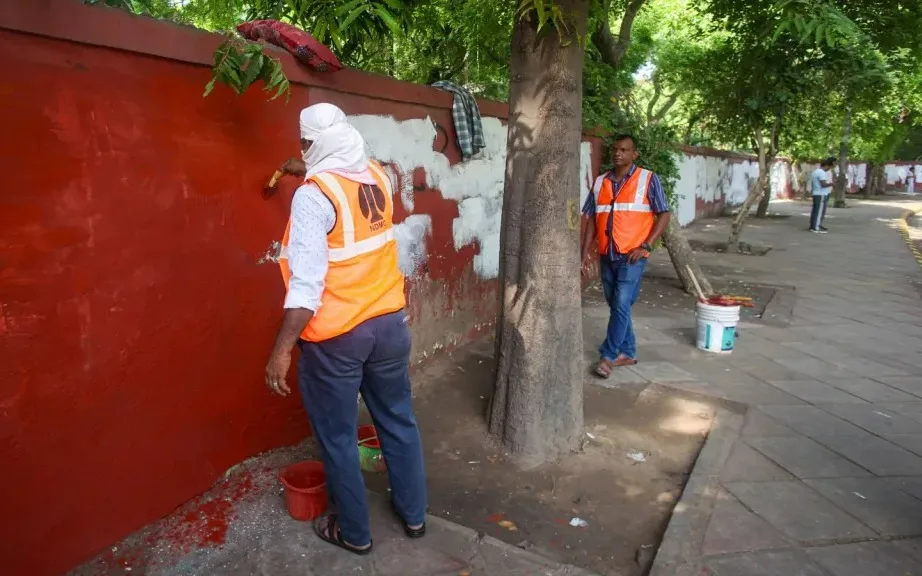
New Delhi authorities restored Jantar Mantar after the Cockroach Janata Party ended its 36 day protest following Education Minister Dharmendra Pradhan’s resignation. The overnight drive removed waste, covered graffiti and repaired public spaces around the protest site.
Reading
In a Nutshell:
- New Delhi Municipal Council deployed 70 sanitation workers overnight, followed by 35 more workers on Sunday.
- Authorities removed around 60 tonnes of waste from Jantar Mantar during the clean up drive.
- Workers painted over graffiti and restored roads, footpaths, walls and green areas near the site.
- Several protesters also volunteered with cleaning up waste.
Why it Matters
The clean up marks the end of CJP’s 36 day street mobilisation after the resignation of Education Minister Dharmendra Pradhan, but it also marks a transition point for the movement. From its origins as a satirical group built around the former minister’s comments, CJP now takes its place among a wider wave of Gen Z led protest movements that have gripped South Asia in recent years, including in Sri Lanka, Nepal and Bangladesh. The movement secured its central demands on the ground, including compensation for affected families and assurances on withdrawing cases against protesters. The question now is what comes next for CJP as its leaders assess whether they want to evolve beyond this movement and eventually enter electoral politics.
What We Think
CJP has already shown that a youth movement built around a single demand can force political change, but the harder part is building what comes next. Expanding beyond the resignation of one minister will require clear priorities, organisation and a roadmap. Whether CJP remains a protest movement or moves towards electoral politics will determine if it becomes a lasting political force or a moment of youth mobilisation.