US Pacific Fleet Commander Visits Dhaka: What It Means for Regional Security
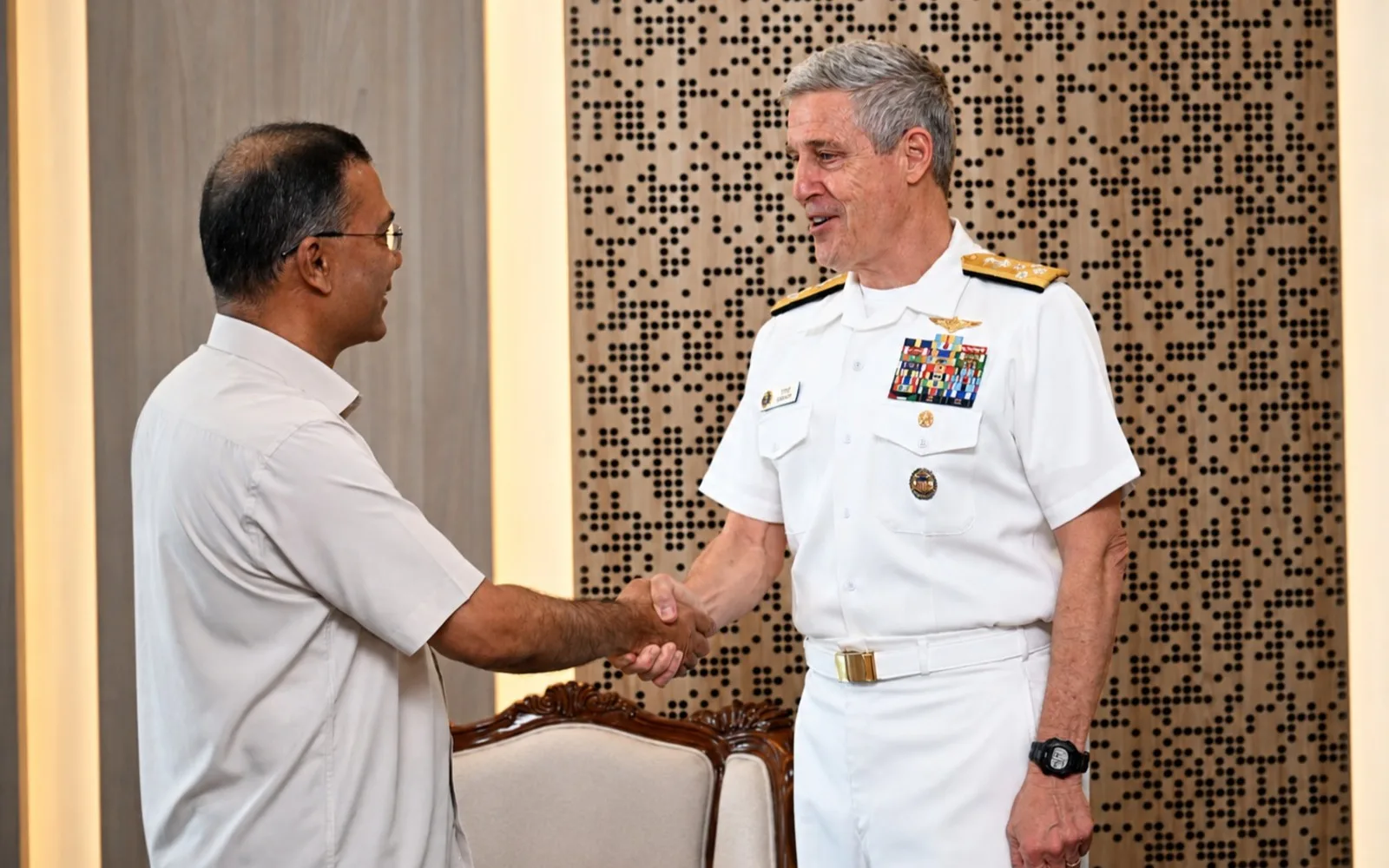
Admiral Koehler highlighted the numerous avenues for US-Bangladesh cooperation, expressing optimism that bilateral ties will continue to strengthen.
Reading
In a Nutshell:
- US Pacific Fleet Commander Admiral Stephen Koehler visited Dhaka Aug 4–6, meeting PM Tarique Rahman and senior defence/foreign officials.
- Discussion topics: HADR cooperation, naval exercises (CARAT in Bangladesh this November, Sea Vision, hoped-for RIMPAC participation), and regional security.
- Two pending agreements were reaffirmed as key: GSOMIA (classified intelligence-sharing) and ACSA (logistics/port/airfield access for US ships and aircraft).
- The visit is part of a broader US push, with Koehler recently attending the Indian Ocean Defence & Security Conference in Perth alongside Australian and Japanese officials.
- Timing follows a US-Bangladesh trade/tariff framework taking effect and coincides with heightened US attention on Myanmar’s Kyaukpyu corridor, a China-linked bypass route to the Indian Ocean.
- Bangladesh’s stance historically has been “strategic hedging”—balancing India, China, and the US without formal alliance commitments.
Why it matters
Bangladesh sits beside the Bay of Bengal, a corridor linking the Indian Ocean to the Malacca Strait/Pacific, and is seen as the “twin” of the South China Sea in great-power competition terms. Deepening US-Bangladesh defence ties places American logistics and intelligence infrastructure near China’s Myanmar overland corridor (Kyaukpyu), which Beijing uses to bypass the Malacca Strait chokepoint. Analysts read the US move as timed to signal Beijing ahead of Trump-Xi talks. Critics warn ACSA could enable “soft bases” or “lily pads” at Cox’s Bazar/Kutubdia, and GSOMIA could pressure Bangladesh to share intelligence on third countries during a US conflict, eroding “intelligence sovereignty”. The Bay of Bengal carries Bangladesh’s fuel, cotton, machinery and consumer-good imports; any militarized disruption there directly threatens Bangladesh’s economy. Deeper alignment with Washington could make China, and even India, more cautious about investment, trade, and cooperation, narrowing Dhaka’s diplomatic flexibility. Proponents argue GSOMIA/ACSA are “routine” technical agreements (more than 70 countries have signed similar ones with the US) that don’t constitute an alliance, and would modernize Bangladesh’s military under its Forces Goal 2030.
What we think
In our view of the scene, Bangladesh must weigh access to advanced US military technology and interoperability against the risk of intelligence-sharing obligations narrowing independent strategic assessment. While the US Embassy insists GSOMIA/ACSA are not alliance pacts, we believe Bangladesh should assess real operational implications (e.g., port/airfield use precedents set by other ACSA signatories) rather than take that framing at face value. We argue that Dhaka needs to continue the historical pattern of diversifying partnerships (India, China, US, Japan) rather than let defence deals lock it into one camp’s orbit, especially given its post-2024 political transition and interim-government-era Indo-Pacific recalibration. Since Kyaukpyu and Myanmar’s stability directly affect Bangladesh’s borders and refugee/trade flows, it is our opinion that any deal that antagonizes Beijing could have spillover effects for Rohingya repatriation and Myanmar-related diplomacy. We suggest using defence talks to extract tangible benefits (technology transfer, FMS access, trade-deficit reduction) while ensuring safeguards on how intelligence or infrastructure access could be used in scenarios beyond Bangladesh’s own interests. Ultimately, given domestic civil-society pushback (e.g., GCDG’s public statement on sovereignty concerns), we feel Dhaka should manage the narrative around these pacts carefully to avoid domestic backlash framing this as “foreign troops on Bangladeshi soil”.