Mirpur Eviction Drive Turns Violent as Arson, Attacks Erupt
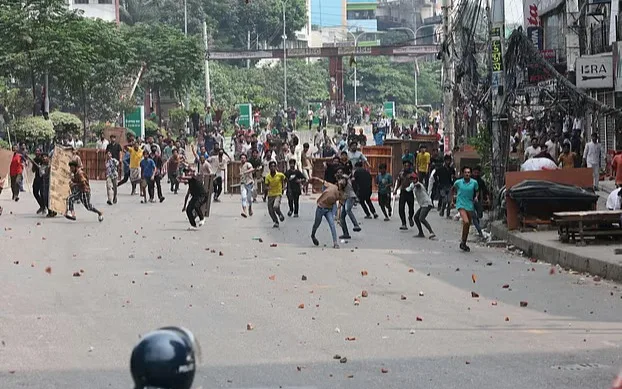
A footpath eviction drive in Mirpur 10 turned violent on Wednesday, with hawkers setting fire to three Dhaka North City Corporation vehicles and vandalising a police vehicle as authorities tried to clear roadside stalls. The confrontation is the latest episode in a long running cycle in Dhaka, where governments repeatedly remove hawkers from roads and footpaths only for them to return, while disputes over livelihoods and alternative spaces continue.
Reading
In a Nutshell:
- DNCC began an eviction drive in Mirpur 10 on September 30 to clear illegally occupied footpaths, with police accompanying the mobile court.
- Hawkers later clashed with police and city corporation officials, setting three DNCC vehicles on fire and vandalising a police vehicle and an excavator. Journalists and police officers were also reportedly injured.
- DSCC had declared the Paltan to Gulistan to North South Road corridor hawker free just days earlier, allowing only registered hawkers at designated locations.
- Similar eviction drives in Gulistan have repeatedly failed to keep roads and footpaths clear, with hawkers returning within hours or days of being removed.
Context
Gulistan provides one of the clearest precedents. In 2017, DSCC prepared a list of about 6,000 hawkers and allocated Tk3 crore to shift them, but the plan failed. In 2019, hawkers returned to Gulistan and Motijheel almost immediately after an eviction drive, while some vendors told TBS they had no alternative place to trade. In 2022, DSCC marked parts of Gulistan as a red zone where hawking would be prohibited and evicted more than 1,000 hawkers. Many returned within days, prompting a second drive that week. Hawkers said they needed to support their families and demanded rehabilitation before eviction. The same conflict has produced direct resistance before. In May 2019, around 1,500 hawkers blocked roads in Gulistan after being evicted, demanding permission to trade on the pavements. The blockade caused major traffic disruption.
Why It Matters
The case for clearing the footpaths is straightforward for pedestrians. A 2026 TBS report found hawkers occupying substantial parts of roads and footpaths in Gulistan, Motijheel and other busy areas after recent drives, leaving pedestrians to walk alongside traffic. A Gulistan resident told the paper that walking on the road had become dangerous because of the risk from vehicles. The counterargument has also remained consistent. Hawkers interviewed over several years have said they return because roadside vending is their livelihood and alternative locations do not attract the same customers. In April 2026, a Gulistan vendor told TBS that moving elsewhere could destroy his business, while another said he had a family to support and could not simply stop trading.
What We Think
The problem is therefore bigger than whether another eviction drive can clear a particular footpath. Unless the city has a workable way to keep commercial activity out of pedestrian space over the long term, repeated clearances will keep producing the same cycle of removal and return. If authorities want the footpaths to remain clear after an eviction, they might need a mutual arrangement with hawkers. In this way, they can meet both citizen concerns on limited road space and hawker’s worries about losing their livelihood.