PM Tarique to Launch Tk1,542cr Flood Control Project in Feni
Prime Minister Tarique Rahman is scheduled to inaugurate the Tk1,542 crore rehabilitation of the Muhuri Kohua Flood Control, Drainage and Irrigation Project in Feni on October 1. The project combines embankment rehabilitation, river excavation, drainage and irrigation work as the government expands a wider programme to restore Bangladesh’s canals and water management infrastructure.
Reading
In a Nutshell
- The Tk1,542.16 crore project will rehabilitate flood control embankments, protect riverbanks, re excavate rivers and water bodies and renovate irrigation infrastructure in Parshuram and surrounding areas.
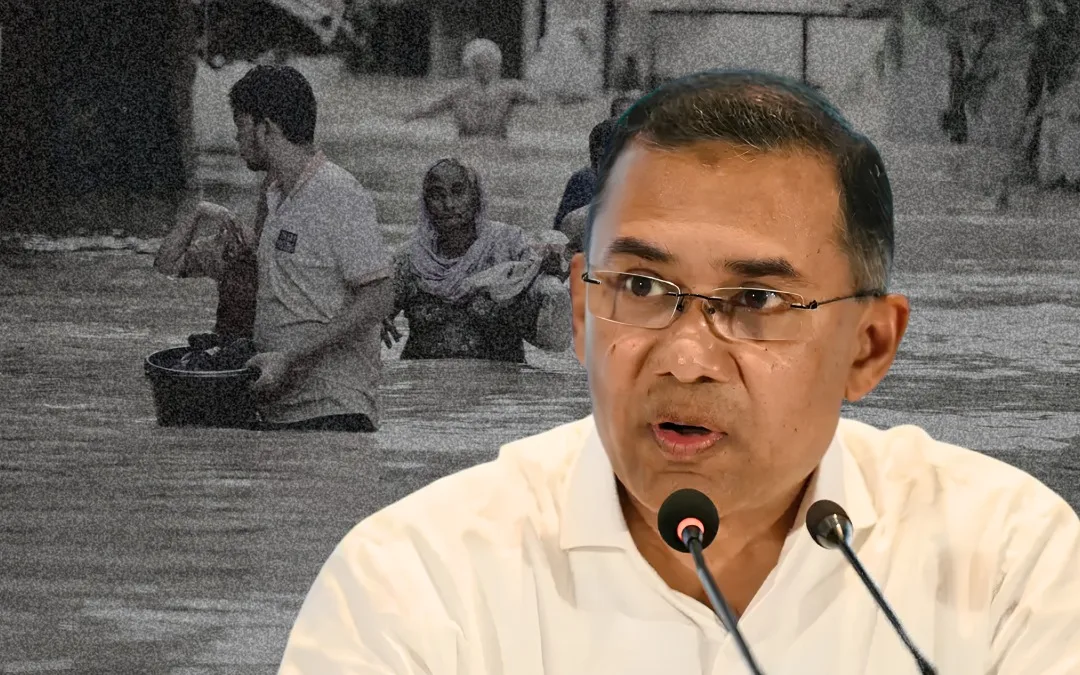
- The project follows the severe 2024 floods, which affected about one million people in Feni and caused an estimated $312.7 million in physical damage in the district.
- Since taking office, Tarique’s government has launched a nationwide canal excavation programme targeting 20,000 kilometres over five years, with work already started in districts including Dinajpur, Bogura, Jashore and Chandpur.
- The government has also approved the first phase of the Tk34,497 crore Padma Barrage project and is pursuing the planned Teesta Barrage project as part of a broader water management programme.
Context
PM Tarique launched the nationwide canal programme in March, beginning with the 12 kilometre Sahapara Canal in Dinajpur while excavation was launched simultaneously at 53 other sites. By April, the government had set a target of 1,204 kilometres of canal excavation or re-excavation under its 180 day programme, alongside another 1,500 kilometres through disaster relief programmes.
Tarique inaugurated the Chaukirdah Canal in Bogura in April, the Ulashi Zia Khal in Jashore and the Khordda Canal in Chandpur in May. Officials have also described the Basia River re-excavation in Sylhet as a way to improve irrigation for about 5,000 hectares while reducing flooding and waterlogging.
The Feni project fits into that same approach, but on a much larger scale. It is designed as a combined flood control, drainage and irrigation intervention rather than a canal excavation alone.
Why It Matters
Feni’s flood damage has come from failures across the water system, with damaged embankments, river erosion, waterlogging and inadequate drainage affecting homes and farmland. The 2024 floods affected 59 percent of the district’s population, isolated about 250,000 households and caused an estimated $312.7 million in physical damage.
The Muhuri Kohua project addresses those problems together. Its 67.92 kilometres of embankment rehabilitation and 83.5 kilometres of river and waterbody excavation are paired with riverbank protection, drainage work and the rehabilitation of 27 irrigation structures.
What We Think
This project fits the government’s broader shift towards restoring canals, rivers and irrigation infrastructure, but Feni also shows why construction alone cannot solve Bangladesh’s recurring water problems. The government’s own canal programme acknowledges that many waterways have been lost to siltation, encroachment and poor maintenance.
The Muhuri Kohua project is therefore more substantial than a short term repair, particularly because it brings flood control, drainage and irrigation into one scheme.