Pakistan's Postponed Reckoning: PTI's Long March Pushed to October 4
From September 25 to 26, PTI's political committee decided to postpone the march to October 4, with KP Chief Minister Sohail Afridi announcing that it will now begin in Peshawar.
Reading
In a Nutshell:
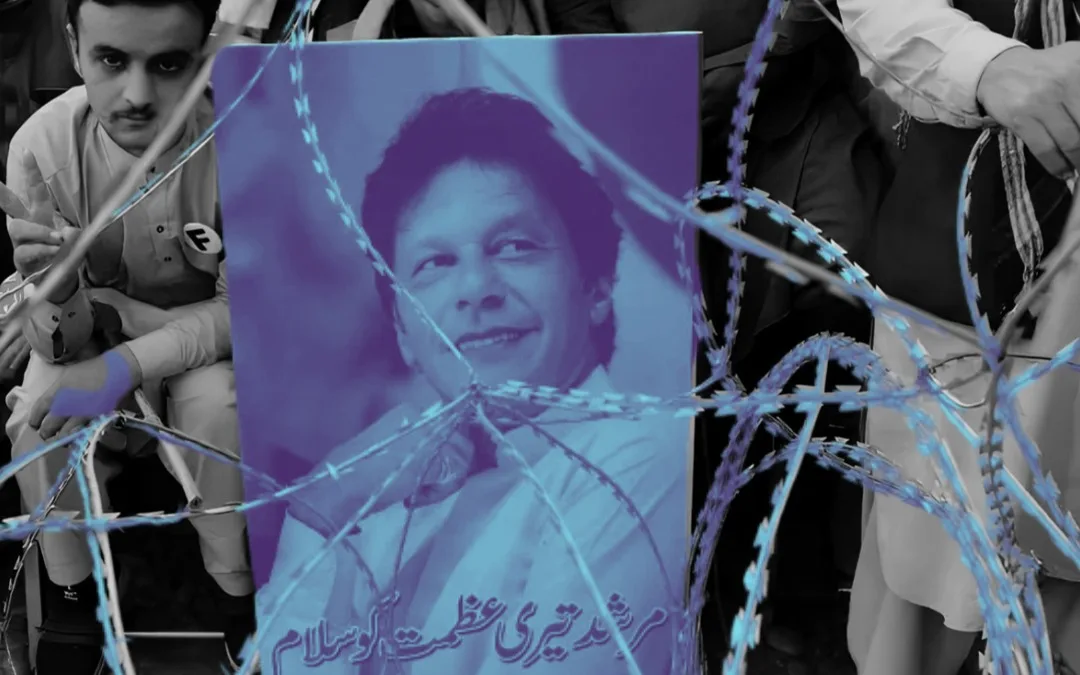
- PTI announced a nationwide march to Islamabad for September 27, demanding Imran Khan's release from Adiala Jail, where he's been held since August 2023 on convictions his party calls politically motivated.
- Ahead of the march, police arrested Khan's sister Aleema Khan at her Lahore home on September 20 under Punjab's Maintenance of Public Order Ordinance, sending her to Kot Lakhpat Jail for 30 days.
- The following day, sisters Uzma Khan and Noreen Niazi, plus several nephews and nieces, were also detained; the children were later released.
- Amnesty International called the detentions "arbitrary" and "a flagrant violation of human rights," noting government officials had "openly vowed to stop" the protests.
- The Islamabad High Court ruled that no political party has the right to occupy public roads, highways, or government buildings, and barred further harassment of PTI leaders.
- Interior Minister Mohsin Naqvi vowed the government would stop the march "in every possible way" and that no group would be allowed to enter Islamabad on September 27.
- Punjab imposed a 13-day ban on public gatherings province-wide, and Islamabad enacted Section 144 restrictions for two months.
- From September 25 to 26, PTI's political committee decided to postpone the march to October 4, with KP Chief Minister Sohail Afridi announcing that it will now begin in Peshawar.
- Afridi framed the movement's goals as "the supremacy of the Constitution, the restoration of an independent judiciary, media freedom, and true freedom."
Context
This confrontation sits atop more than two years of PTI-government conflict since Khan's August 2023 imprisonment, which itself followed the chaotic May 9, 2023, protests where PTI supporters attacked military installations, an event the state has used repeatedly to justify crackdowns on the party. The pattern here is familiar: PTI announces a mass mobilisation; the government responds with mass preemptive detentions, road closures, and legal manoeuvring in the courts; and the march either gets diluted, postponed, or violently contained. Targeting Khan's sisters, who have used their public profiles to raise concerns about his prison healthcare and criticise the growing influence of army chief Field Marshal Asim Munir, marks an escalation in how far the state is willing to go, moving beyond party officials to family members. This mirrors a broader regional and Pakistan-specific playbook in which dissent is managed through pre-emption rather than negotiation, leaving genuine grievances over judicial independence and constitutional amendments unresolved rather than actually addressed.
Why It Matters
The postponement doesn't defuse the standoff; it just delays it while every underlying tension stays live: PTI's grievance over Khan's imprisonment, the party's family members still detained, and a government publicly committed to blocking any show of opposition strength. With Rangers already authorised through October 5, the state's security apparatus stays primed. This looks less like de-escalation and more like a rescheduled confrontation, and it may signal PTI is recalculating its ability to mobilise crowds against a government willing to jail elderly family members preemptively.
What We Think
Islamabad faces a real trade-off between short-term control and long-term legitimacy. Continuing to detain Khan's elderly sisters and relatives under public-order laws, rather than case-specific charges, invites sustained international criticism from groups like Amnesty International and risks turning family members into rallying symbols rather than deterrents. Blanket road closures, internet restrictions, and province-wide assembly bans might stop one march, but they also prove PTI's core argument about shrinking constitutional space. The government needs to weigh whether continued suppression buys real stability or just defers a larger, angrier mobilisation to October 4, especially if Pakistani Jamaat-e-Islami's parallel inflation protests find common cause with PTI supporters.