The Curse of Rahul Gandhi
Pappu can now dance, but can he also sing and run the country? Not yet!
Reading
He has walked across the country, found his political voice, and outlived the “Pappu” jokes. But becoming believable is not the same as becoming electable. Rahul Gandhi has spent much of his political career arriving late to his own introduction.
By the time he began sounding like a politician with something to say, the BJP had already told India who he was, a privileged prince, an accidental leader, a man born with a political silver spoon and occasionally caught trying to eat soup with it. The nickname Pappu did the rest. It turned an argument about competence into a joke, and jokes travel faster than manifestos.
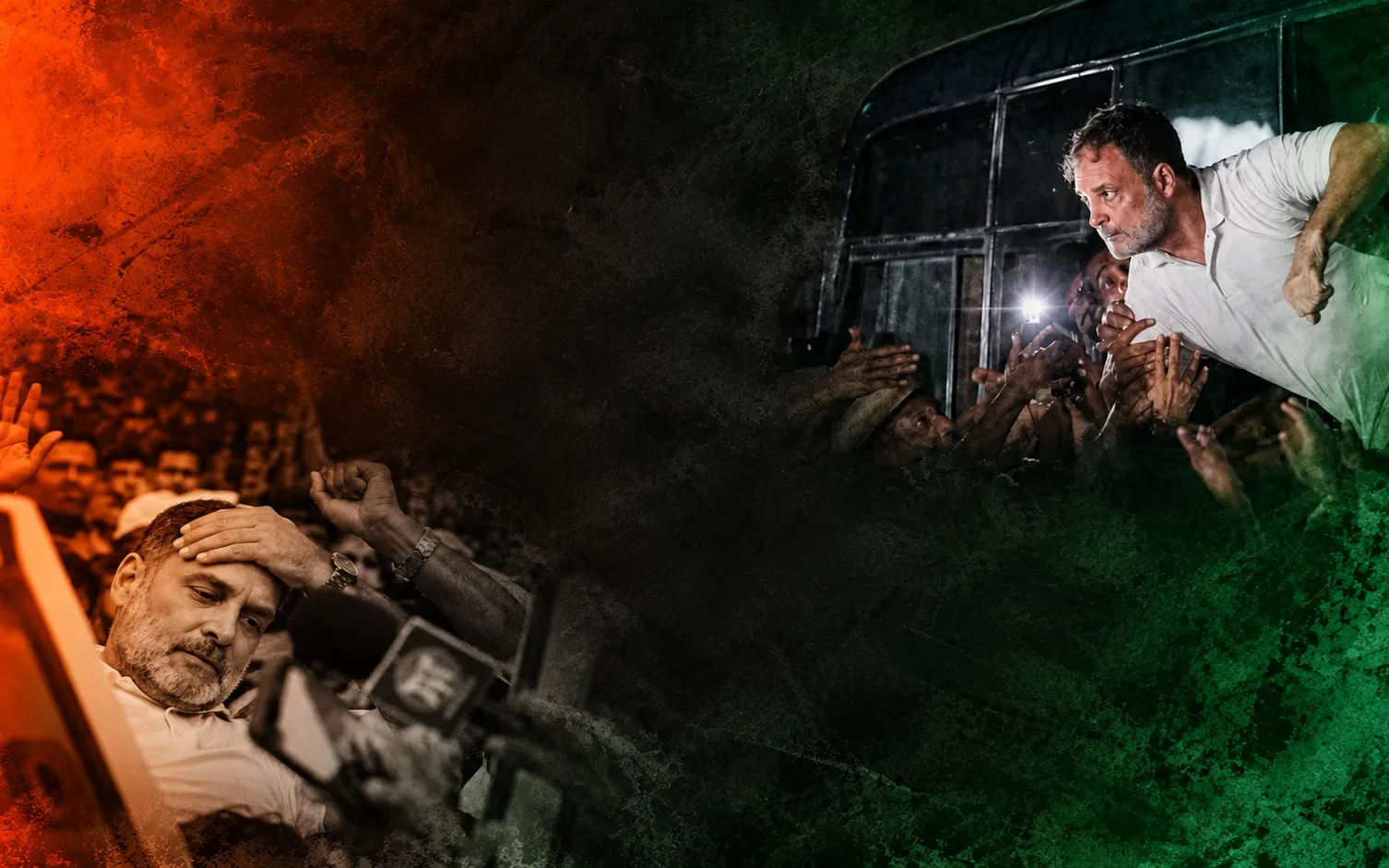
That version of Rahul is now outdated. But political caricatures, like WhatsApp groups, are difficult to leave. The Bharat Jodo Yatras changed him. Or, at the very least, they changed how many Indians saw him. He walked, listened, hugged strangers, grew an impressive beard and demonstrated that he could remain committed to something longer than a television news cycle. The charge that he was simply unwilling to do politics became harder to sustain.
The results followed. Congress rose from 52 Lok Sabha seats in 2019 to 99 in 2024. The BJP fell from 303 to 240, losing its single-party majority. Rahul comfortably won both Rae Bareli and Wayanad before retaining Rae Bareli.
But India did not suddenly wake up wanting him as prime minister.
In the 2024 Lokniti-CSDS post-poll survey, 40.7% preferred Narendra Modi for the job, against 27% for Rahul.
Rahul had become competitive enough to worry the BJP, but not convincing enough to replace it. That is the Rahul Gandhi problem in one sentence: India increasingly believes that he means well, but it is still unsure what would happen if he won.
Indian comedy understood his predicament long before Congress did. For years, Rahul was less a politician than a recurring character: the confused heir, the earnest schoolboy, the man who could walk into a punchline without needing a setup. Kunal Kamra has recalled an earlier stand-up culture where jokes about the BJP and Rahul Gandhi could comfortably appear in the same set.
Rahul was politically safe comedy: famous enough to recognise, weak enough to ridicule and unlikely to send anyone into a panic.
More recently, the joke has started moving. At a 2026 Congress event in Indore, comedian Pulkit Mani mimicked Modi’s mannerisms and diplomatic hugs while Rahul played along. The BJP was furious; Devendra Fadnavis suggested Rahul should quit politics and become a stand-up comedian. There is a small historical irony here: after spending a decade as Indian politics’ favourite punchline, Rahul is finally trying to tell the joke.
Yet humour also reveals his central weakness. Rahul can laugh at power, but voters want to know whether he can exercise it.
His strongest public persona remains that of a dissenter. He talks about unemployment, inequality, caste exclusion, communal division and threats to the Constitution. He appears most convincing when describing what is wrong with Modi’s India. The difficulty begins when the conversation shifts from resistance to administration.
A critic needs moral clarity. A prime minister needs command.
Modi arrived in national politics with years of executive experience in Gujarat. Rahul has been an MP, Congress president and now Leader of the Opposition, but never a chief minister, cabinet minister or head of government. That does not make him incapable. It does mean India is being asked to buy the product without seeing a demonstration model.
Then there is Congress itself.
Rahul can attract attention, but his party often struggles to turn that attention into votes. Elections are eventually decided by the unglamorous machinery of politics: booth committees, local organisers, sensible candidates, functioning alliances and senior leaders capable of spending three consecutive days together without briefing against one another.
Congress has repeatedly created momentum at the top and confusion underneath. Even assessments sympathetic to the Bharat Jodo Yatra warned that Rahul’s improved image would not become electoral power without organisational revival. Later state-level defeats showed that the warning had not been fully absorbed. Modi, meanwhile, is not standing alone on a stage.
Behind him sits the BJP, the RSS, a vast communications machine and a welfare network that connects government benefits to the prime minister’s personal brand. Lokniti-linked analysis after the 2024 election found that beneficiaries of major schemes were more likely to support the BJP-led alliance.
Rahul can win the argument about inequality and still lose the household that received free grain.
His surname makes everything harder. The Gandhi name gives him national recognition and keeps Congress’s quarrelling factions inside one tent. It also makes every success look inherited, and every failure look inevitable. Congress asks India to reject concentrated power even as it remains unable to imagine its own future without one family.
That contradiction cannot be solved with another makeover. India has already met Rahul the reluctant prince, Rahul the bearded traveller and Rahul the combative parliamentarian. There are only so many times one man can be reintroduced to the same electorate.
What he needs now is not a new image but evidence: successful Congress governments, empowered regional leaders, clearer authority within the party, and an economic programme that ordinary voters can repeat without first downloading a PDF.
Rahul Gandhi is no longer rejected as he once was. He has become the country’s principal opposition leader and the only Congress politician with an unmistakable national presence.
But India appears to have promoted him only halfway from punchline to protagonist, not yet from protagonist to prime minister.
That is his curse. The man has finally arrived. His party is still looking for the address.
A. Abbas is a researcher and analyst based in Chittagong who thinks pop culture and politics go hand in hand.