Rooppur and The Politics of Permission
Bangladesh’s first nuclear plant was meant to give the country more control over its own power. It has also shown how many others still have to say yes, and whose rules Dhaka must follow to pay for it.

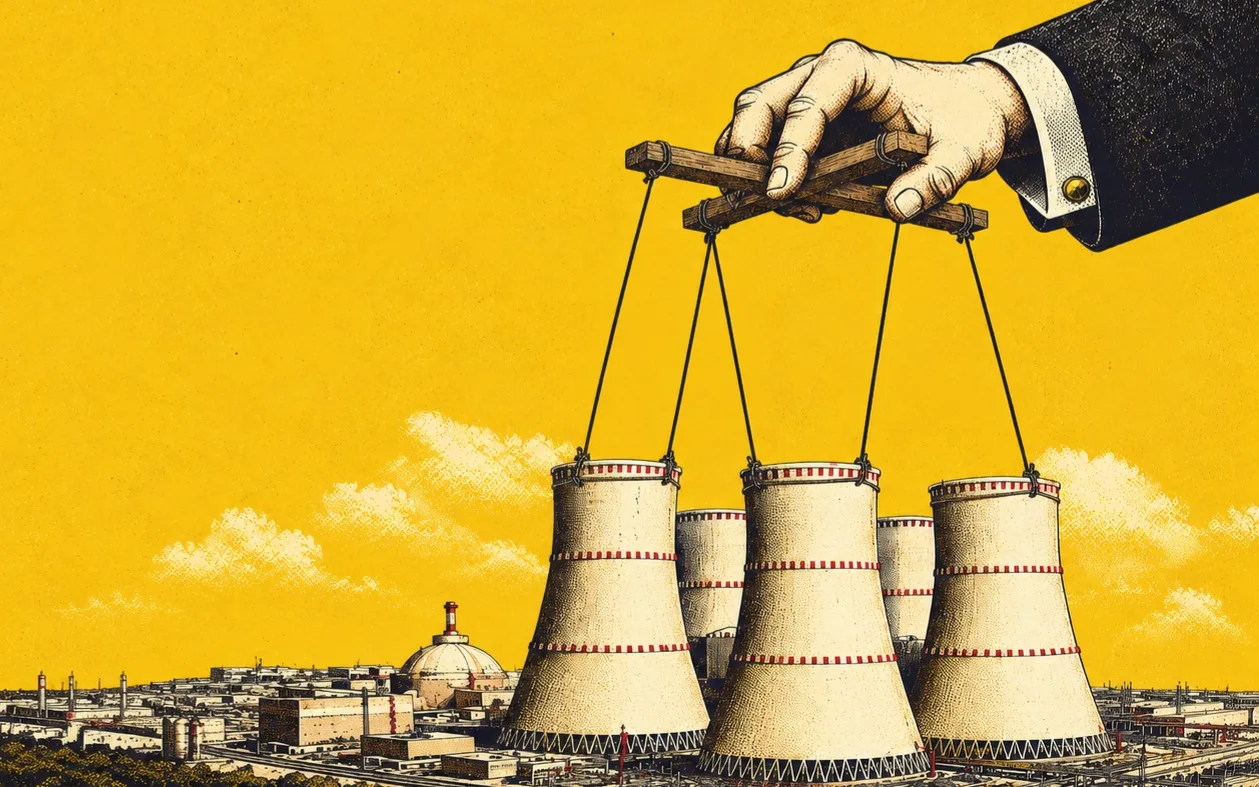
The airport was ready for a flight due on 24 September 2026. Officials from the science and technology ministry had finished their preparations and were waiting for a Russian cargo plane carrying nuclear fuel for the Rooppur Nuclear Power Plant. Then a liaison officer from Rosatom told them the airspace was not clear. The plane never took off. Within days, Science and Technology Minister Faqir Mahbub Anam named the country. Speaking to the Indian news agency ANI, he said Pakistan had not allowed the flight into its airspace. Islamabad neither confirmed nor denied a refusal, and called the matter technical and procedural.
The fuel finally landed at Hazrat Shahjalal International Airport at 11:44 pm on Friday, 2 October. The next morning, three lorries carried it across the Jamuna Bridge under Army escort. The wait had lasted a little over a week. It was not a crisis, and nothing on the public record supports a bigger theory about Pakistan’s motives. But for one week, the public could see something that usually happens out of sight. Rooppur moves only when someone else says yes. In the air, that meant a neighbour’s clearance. In the money, it meant Washington. Notice, too, how the public found out: from an Indian news agency, not from a briefing in Dhaka. For nuclear fuel under state control, that is part of the safety story and the sovereignty story, too.
A Project That Outlived Its Governments
Rooppur is older than Bangladesh. It was first proposed in 1961, when it was still East Pakistan, and government after government returned to it without the money or the technology to carry it through. For a while, the partner looked likely to be China. Then, in 2009, Russia made a formal offer, and Dhaka said yes. The general contract was signed in December 2015: $12.65 billion for two 1,200 MW reactors, with Russia lending up to $11.385 billion, about 90% of the cost. Under Sheikh Hasina, Rooppur became a source of national pride, and then a story of missed deadlines. Unit 1 was originally due in October 2023. In June 2026, the minister told parliament that the first 300 MW would be connected to the grid by the end of August 2026. August came and went. Two relief valves in the reactor’s main cooling system, small parts with a big job, did not work as they should. Five Russian specialists arrived in September, and officials talked openly about taking the matching valves from Unit 2; whether that happened has not been confirmed. On 30 September, operators passed a high-pressure test, though more approvals lie ahead. None of this means the plant is unsafe; refusing to move until the equipment is right is what regulation is for. But it shows how narrow the road is. When a part made for this one design fails, Bangladesh cannot buy another off the shelf. It has to go back to the designer, the contractor and the original supplier, all of whom are Russian. Three governments have now held this plant in their hands. Hasina’s government signed and built it. The interim government inherited its debts and renegotiated them. The BNP government must now switch it on, decide what its electricity will cost, and keep paying for it. Each has spoken about foreign policy in its own language. Each has run into the same walls. The dependence is no longer one party’s choice. It is built into the concrete
What Russia Supplies
Rosatom did not just build Rooppur. Its fuel company is the sole supplier for both reactors for their entire 60-year lives. So when Moscow showed flexibility on Rooppur’s debt, it was acting out of both interest and friendship. A stalled plant would embarrass the seller as much as the buyer. The leverage runs both ways, but it is not equal. Bangladesh owns the plant. Russia holds most of what is needed to run it.
Paying Moscow by Washington’s Rules
Before Russia invaded Ukraine, paying for Rooppur was routine. Then, sanctions closed the route. The first collision came at sea. In December 2022, after a warning from the United States, Bangladesh turned away the Ursa Major, a sanctioned Russian ship carrying equipment for Rooppur. The equipment still came on other ships. The supply chain did not break; it became slower, costlier and more political. Money was harder to reroute than cargo. Russia kept offering alternatives: Chinese banks, yuan, roubles. A 2023 understanding to pay in yuan was never fully used, and Bangladesh Bank officials said the country could not easily pay outside its usual channels. This was not Dhaka simply obeying Washington. Its banks rely on Western partner banks to reach the rest of the world. So the money waited. According to The Daily Star, the escrow account at Bangladesh Bank grew from about $809 million in October 2024 to $1.03 billion by June 2025. Then came one transaction that captured the whole problem. In February 2025, according to The Business Standard, Sonali Bank tried to send just over $2 million from Atomstroyexport’s account to a Spanish subcontractor. Standard Chartered in New York stopped it over sanctions. A Bangladeshi state bank’s payment for a plant in Pabna had been halted in New York by a British bank applying Western rules. In April 2025, the interim government asked the US Treasury’s Office of Foreign Assets Control for authorisation to make the payments. The Daily Star later reported, citing officials, that OFAC had granted a temporary authorisation, with final clearance still to follow. The licence has not been published, and no one has publicly confirmed that the money has moved. Alongside this, the debt itself was rewritten. After Chief Adviser Muhammad Yunus met Rosatom’s chief in February 2025, repayments were pushed to September 2028, and Russia waived about $164 million in penalties.
What the Payment Problem Proves
The evidence proves one thing clearly. To pay a debt to the Russian state through a route exposed to US sanctions, Bangladesh decided it needed Washington’s authorisation, and asked for it. It does not prove that Washington used that moment to squeeze concessions from Dhaka; there is no public evidence to that effect. And it did not stop with one government. In early 2026, as war in the Middle East shook energy markets and cars queued at Dhaka’s fuel stations, the BNP government turned to Washington. On 31 March, Foreign Minister Khalilur Rahman made the case to US Energy Secretary Chris Wright: farmers needed uninterrupted diesel for the planting season. According to The Business Standard, the US State Department told the foreign ministry on 11 April that Bangladesh had a 60-day waiver to buy Russian fuel. The foreign minister rejected the idea that Bangladesh needs Washington’s permission to buy oil. Waivers, he said, come from global sanctions on Russia, not from any bilateral deal. That distinction is fair. It is also the point. Bangladesh is not taking orders from Washington. It is working inside a system that Washington enforces. Two governments, two products, the same constraint. What can reasonably be inferred is that Bangladesh lives with two layers of dependence: on Russia for the plant, and on a dollar-run financial system to keep that relationship alive. Going along was the rational choice. But it still shows where power sits. Bangladesh could keep its friendship with Moscow. It could not treat the fallout of Russia’s war as someone else’s problem.
Who Actually Holds the Leverage
Washington comes first in the money story. It did not build a single wall at Rooppur, yet its sanctions decided which ships could dock and which banks would move the money. The civil nuclear memorandum signed on 25 September is modest by comparison, but it gives Washington a chair at the table where Russia once sat alone. India matters more than its quiet profile suggests. The Adani plant in Jharkhand can already export about 1,496 MW, roughly 9% of Bangladesh’s peak demand. Rooppur does not end Bangladesh’s reliance on foreign power. It adds another big source under different politics. And India sits upstream on the river that cools the reactors. China’s role is narrow. It sits in the financial background, not in the control room. Pakistan’s documented role lasted a little more than a week: long enough to delay one flight, not long enough to support any wider theory.
What the Numbers Say
At $12.65 billion for 2,400 MW, Rooppur cost roughly $5,270 per kilowatt. Egypt’s El Dabaa, built to the same Russian design, is estimated at about $6,250, and Hungary’s original Paks II estimate was about €5,200. The comparison is rough, but it does not support the claim that Rooppur was wildly overpriced. The more telling numbers are about the power system. Bangladesh has around 29-33 GW of installed capacity, yet on its busiest days, it generates only about 16 GW. In July and August 2026, the gas crisis sharply cut generation, and load-shedding spread from villages to Dhaka. A power plant on paper is not the same as a light that comes on at home. That is where Rooppur’s real value may lie: a large block of electricity, about 14-15% of peak generation, that does not wait for the next LNG tanker. So what will Rooppur’s electricity cost? Publicly, nobody knows. The plant began loading fuel without a published tariff or a signed power purchase agreement, according to The Daily Observer. That leaves the most important question open. Will Rooppur save more dollars on imported gas and coal than it costs in loan repayments and Russian fuel? The answer depends on numbers that the public still cannot see. Until they are published, any confident answer is a guess. That silence is itself part of the story.
The River and the Waste
The dependence runs through the Padma too. The Ganges Water Sharing Treaty, which governs the dry-season flow at India’s Farakka Barrage upstream, reaches the end of its 30-year term in December 2026. If it is neither renewed nor replaced, the rules would turn uncertain just as Bangladesh asks the river to do something new. The used fuel tells the same story in reverse: Russia has agreed in principle to take it back. The September flight was a preview. One day, nuclear material will need permission to travel the other way.
The Allegation
Rooppur carries a corruption file as well as a construction history, and the two should not be confused. In 2024, claims emerged that Sheikh Hasina, Sajeeb Wazed Joy, Tulip Siddiq and others were linked to the theft of up to $5 billion from the project. The figure first appeared on a website called Global Defence Corp, and the Anti-Corruption Commission opened an inquiry. The inquiry is a fact. The $5 billion money trail is not. No public evidence has traced such a payment to anyone named, and Rosatom and Sajeeb Wazed have denied the allegations. The story also reached London, where Tulip Siddiq resigned as a Treasury minister in January 2025, though the standards adviser found no breach of the ministerial code. A Dhaka court later convicted her in absentia, but in a separate land case, not in the Rooppur case. She denies wrongdoing. An inquiry is evidence of suspicion. A resignation is evidence of political pressure. A conviction in one case is not a verdict in another. Rooppur’s political weight does not depend on an unproven conspiracy. The documented story is heavy enough.
Who Was Checking?
Parliament could have asked the hard questions. But for about 19 months after August 2024, Bangladesh had none, through the request for US authorisation and the rewritten Russian loan. The public, meanwhile, has tended to hear about problems late. A fire in a server room on site on 7 September became known only from the next day’s news; the valve problem, only after the August target had passed. In a nuclear programme, telling people what is happening is not public relations. It is part of safety. Parliament is back now. What will the electricity cost? Has the escrowed money moved? What emergency plans have been practised with the people of Ishwardi, who will live beside the plant for 60 years? These are not anti-nuclear questions. They are what make a nuclear state governable.
Three Ways to Read Rooppur
The first sees Rooppur as a monument to the Hasina era: a prestige project, built on borrowed money with a politically close partner, and shadowed by corruption claims. The evidence supports the debt and the closeness, not yet the corruption. The second sees it as a sensible hedge: a country short of affordable fuel investing in electricity that does not wait for the next LNG tanker. This year’s fuel crisis made that case stronger, but it cannot be proven until the price is public. The third sees it as a geopolitical burden: a decades-long tie to a Russian supplier caught in Western sanctions. The payment troubles support that, but also show the relationship can be managed, at a price. The fuel kept coming. Each reading is partly right. Rooppur is all three at once: a prestige project that may still prove useful, and a useful project whose costs depend on rules Bangladesh does not write.
The Limits of Friendship to All
Bangladesh describes its foreign policy as friendship to all and malice towards none. Rooppur shows where that balancing gets hard. In money, a Russian-built nuclear plant pushed it to choose a system, and it chose not to risk its banks’ ties to the West. When the fuel crisis came, a different government made the same choice. The country’s energy dependence did not disappear. It changed shape. Bangladesh now depends on one foreign supplier for its most expensive power plant, on a Western-run financial system to pay for it, and on a neighbour upstream for the river that keeps it cool. That may still be a reasonable bargain. Energy security was never about depending on anyone. It is about surviving a blocked payment or a broken part without the lights going out, and that depends on the public knowing the terms. On 3 October 2026, three lorries rolled into Rooppur under heavy guard, carrying fuel that had waited more than a week for someone else’s clearance. Bangladesh owns the plant. Its sovereignty will be measured by whether it can manage all the permissions around it, and by whether its own people are allowed to know when someone says no.