Constitutional Amendment Bill May Come in January, says Home Minister
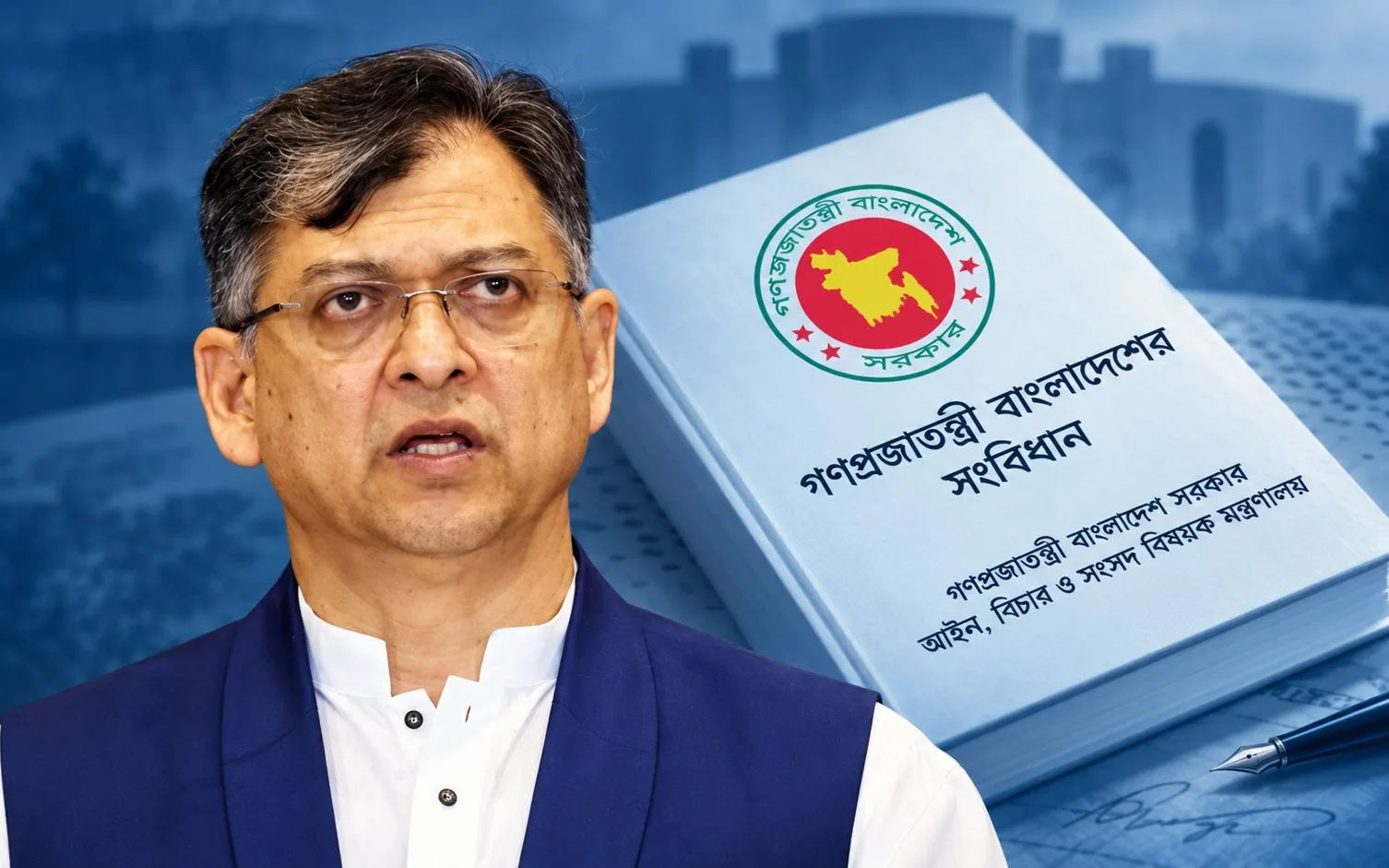
Home Minister Salahuddin Ahmed says a constitutional amendment bill may be introduced in Parliament’s first session next January, after the special committee submits its report by December.
Reading
In a Nutshell
- Home Minister Salahuddin Ahmed says a constitutional amendment bill may be introduced in Parliament’s first session next January, after the special committee submits its report by December.
- The Law, Justice and Parliamentary Affairs Ministry is expected to draft the bill based on the committee’s recommendations.
- Amendments affecting fundamental constitutional provisions, including the preamble, Article 142 or other protected clauses, would go to a referendum before receiving the President’s signature.
- The minister says Article 142’s referendum provision returned after the Supreme Court ruling that struck down the Fifteenth Amendment, which had removed it.
- The committee is considering referendum protection for any future change to the caretaker government system.
- Political parties, including opposition groups and signatories to the July National Charter, have been invited to contribute proposals.
Context
Bangladesh’s Constitution has been amended repeatedly since independence, often in response to political transitions, changes in governing arrangements and disputes over state power. Article 142 regulates the constitutional amendment process, while the preamble expresses the document’s foundational political and legal principles. The return of a referendum requirement for certain changes raises the threshold for altering provisions regarded as central to the constitutional order.
The caretaker government's issue carries particular political weight because it has long been tied to public confidence in election-time neutrality. The committee’s work also draws on the July National Charter and election manifesto commitments, placing the proposed changes inside a wider effort to define the rules of political competition after a period of institutional and electoral contestation.
Why It Matters
Salahuddin Ahmed’s remarks suggest that the July National Charter is moving from a political agreement toward possible legal implementation. But he did not say the charter would be adopted in full. By giving it “priority” while also considering unresolved issues and party manifestos, he indicated that the committee is using it as the main reference point for a wider reform package.
The January bill may show which charter commitments become constitutional provisions, which go into ordinary law, and which remain unfinished. The referendum proposal further raises the stakes, particularly regarding foundational provisions and the caretaker government system. The core question now is whether the charter becomes a shared constitutional settlement or is selectively translated through parliamentary politics.
What We Think
Bangladesh appears to be entering the implementation stage of the July National Charter, but the pathway remains unclear. Salahuddin Ahmed’s position points to a layered process: agreed charter provisions first, contested issues next, and political-party proposals alongside them. That can widen consensus, but it can also allow important commitments to be softened, delayed or excluded without public clarity.
The committee can address this by publishing a clear implementation roadmap: which charter commitments will be incorporated into constitutional amendments, which will be addressed through ordinary laws, and which remain contested. The caretaker government proposal will be an early test. If its protection through a referendum proceeds, it signals an attempt to place a key political settlement beyond the reach of temporary parliamentary majorities.