Sri Lanka’s Former First Lady Arrested Over Corruption Allegations
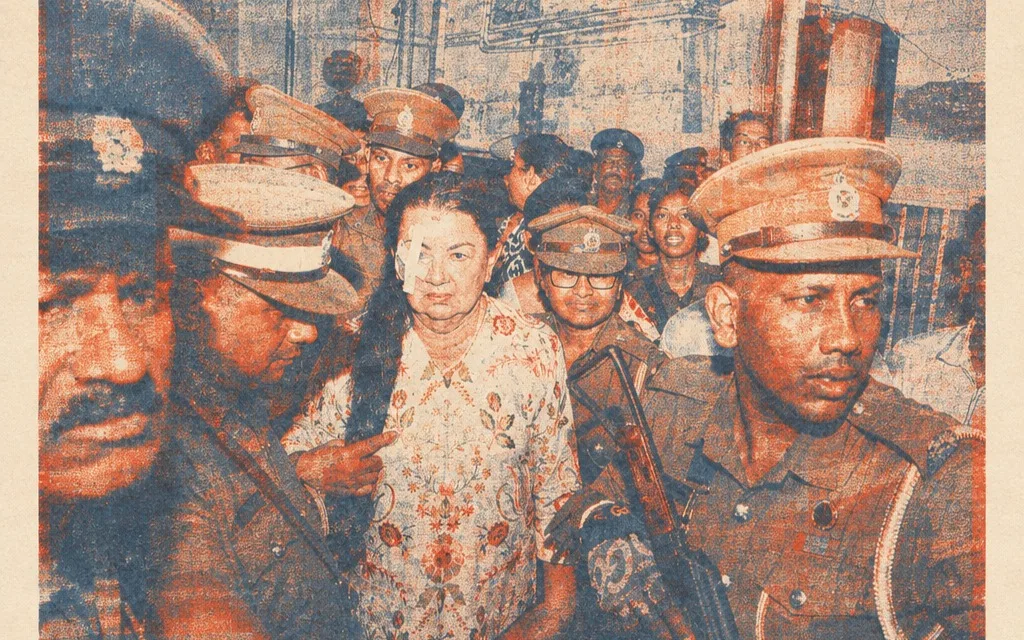
Sri Lanka’s former first lady Shiranthi Rajapaksa was arrested on Wednesday, October 7, over allegations that her charity misused Rs. 10 million in donations intended to fund a medical scanner for a children’s hospital. Her arrest comes four years after the Rajapaksas’ fall from power in the aftermath of the 2022 Aragalaya protests, which saw widespread public anger over the family’s economic mismanagement. The protests were particularly significant because the Rajapaksas had long enjoyed strong support among Sri Lanka’s Sinhala Buddhist majority.
Reading
In a Nutshell
- Shiranthi Rajapaksa was arrested after Sri Lanka’s anti-corruption authorities questioned her over Rs 10 million received by her Siriliya Saviya charity from a state bank.
- Investigators allege the money was collected for a specialised scanner for Colombo’s Lady Ridgeway Children’s Hospital, although the hospital had already received a scanner from China.
- The then-chairman of the National Savings Bank was also arrested for allegedly releasing the funds without following financial procedures and was later granted bail. Shiranthi has denied wrongdoing.
- Shiranthi’s son, opposition lawmaker Namal Rajapaksa, is also in remand custody over separate bribery allegations linked to a 2013 Airbus aircraft deal and a stalled hotel project. He ran for president in 2024 as the SLPP candidate, seeking to revive the Rajapaksas’ political dynasty after the family’s fall from power in 2022.
- The Rajapaksas first built enormous public support after Mahinda Rajapaksa’s government defeated the Tamil Tigers in 2009, ending Sri Lanka’s 26 year civil war.
- Mahinda’s popularity declined after his re-election in 2010 amid allegations of corruption and restrictions on freedoms. He lost the presidency in 2015, but the family returned to power when his brother, Gotabaya Rajapaksa, won the presidency in 2019.
- Mahinda resigned as prime minister in May 2022 to appease public anger, but Gotabaya resisted calls to step down for weeks. He was eventually forced to flee Sri Lanka in July before officially resigning as the Aragalaya protests intensified over shortages, power cuts and overall economic collapse.
- Ranil Wickremesinghe became president after Gotabaya resigned, with the Rajapaksa-backed SLPP supporting him. He was accused of protecting the family from prosecution and giving it space to regroup, allegations he denied.
Context
The Rajapaksas became Sri Lanka’s dominant political family under Mahinda Rajapaksa, whose government ended the country’s 26-year civil war in 2009 by defeating the Tamil Tigers.
Mahinda was president from 2005 to 2015, while his brother Gotabaya was defence secretary, and the victory made the family especially popular among the Sinhala Buddhist majority. Their influence grew further as Mahinda’s brothers Basil and Chamal Rajapaksa took senior government positions, with other relatives also appointed to key posts across the state. But Mahinda’s popularity declined during his second term amid allegations of corruption, abuse of power and restrictions on freedoms, and he lost the presidency in 2015.
In 2019, the family returned to power after the Easter Sunday bombings at three churches and several hotels killed 267 people and made national security a central issue in the presidential election. Gotabaya became president, while Mahinda returned as prime minister.
Their return to office coincided with the COVID-19 pandemic, which brought a crash in Sri Lanka’s economy as tourism came to a standstill. The crisis was further worsened by the government’s mishandling of economic policies, and by 2022, the country faced severe shortages of fuel, food and medicine, along with soaring prices and prolonged power cuts.
Mahinda resigned as prime minister in May 2022 to ease public anger, but Gotabaya resisted calls to step down for weeks. The Aragalaya protests eventually forced him to flee Sri Lanka in July and resign.
Why It Matters
Former first lady Shiranthi Rajapaksa’s arrest brings the corruption allegations surrounding the Rajapaksa family back into focus. Her son Namal, who is also in remand custody over separate bribery allegations, ran for president in 2024 as the SLPP candidate, showing that the family was still trying to rebuild its political presence after its fall in 2022.
As the Rajapaksas retained considerable influence even after their fall in 2022, the timing is interesting that the corruption allegations are finally being investigated. Ranil Wickremesinghe became president after Gotabaya’s resignation with the backing of the Rajapaksa-led SLPP, and was accused of protecting the family from prosecution, allowing it to regroup and shielding it from political and international pressure. He denied the allegations.
Anura Kumara Dissanayake then won the 2024 election on an anti-corruption platform, and investigations involving the Rajapaksas that had stalled under previous governments were revived.
What We Think
Shiranthi Rajapaksa’s arrest now puts a much bigger question on the table: is this the beginning of the end of the Rajapaksas’ political influence, or another high-profile investigation that stops short of fundamentally changing their place in Sri Lankan politics?
The family survived its fall from public favour in the aftermath of the Aragalaya, with Namal trying to revive its electoral fortunes in 2024. What remains to be seen is whether these renewed cases will lead to meaningful accountability or simply demonstrate that the family is being investigated.