Government to Set Up AI Training Centres in Sylhet
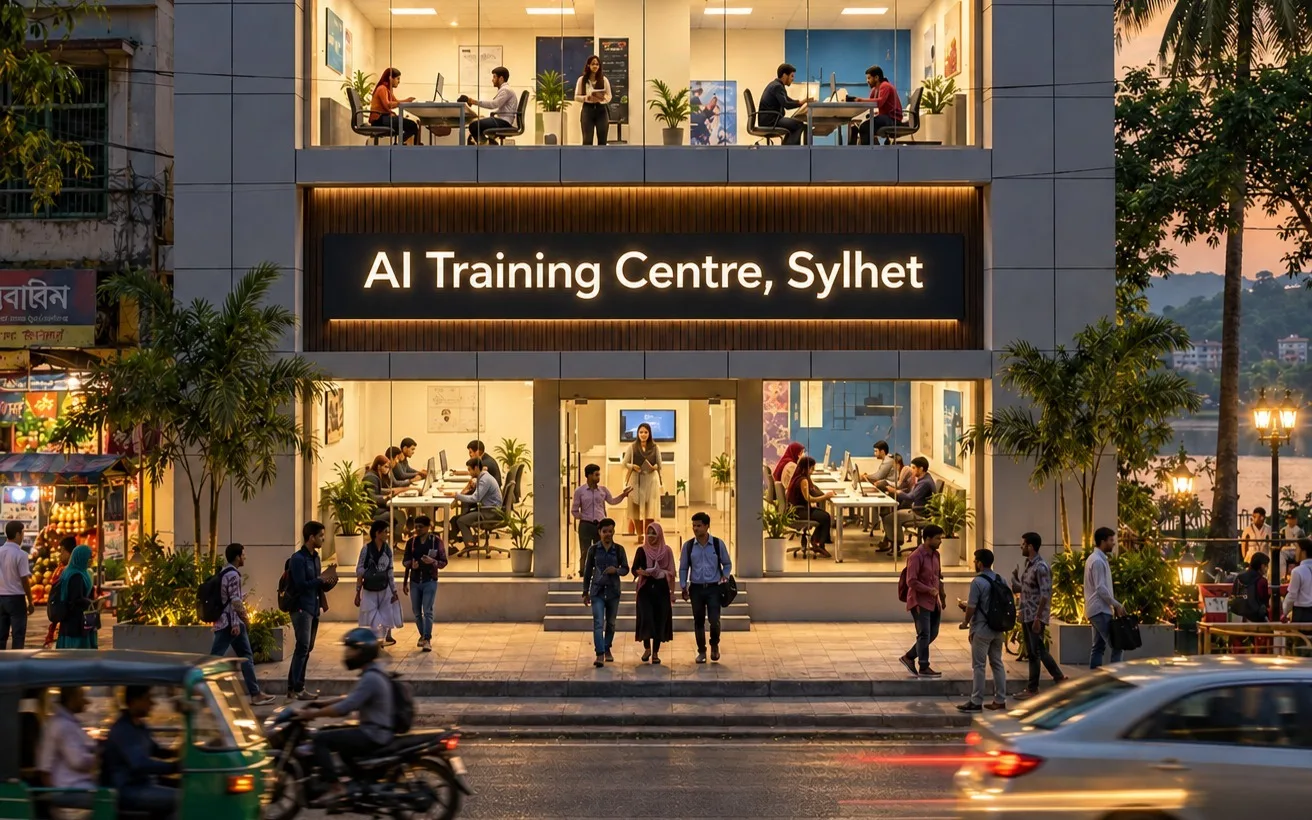
The government plans to establish several AI training centres in Sylhet and gradually expand them across the division, adding AI skills to a broader push to train young people for international digital work. The move follows government freelancing programmes that have already produced reported earnings from thousands of trainees.
Reading
In a Nutshell:
- Muktadir said several AI training centres will be established in Sylhet before being expanded to other districts in the division.
- The centres will train young people in AI and IT skills for freelancing and international technology work.
- He said Bangladeshi freelancers already earn between $500 and $5,000 a month, while highly skilled freelancers earn considerably more.
- He also said education and health are government priorities, with a long term goal of raising spending on each sector to 5 percent of GDP.
Context
The government has been building a freelancing workforce through training programmes for several years. Under the Department of Youth Development’s current programme, 10,800 young people had completed training in 48 districts by December 2025. Of them, 6,732 had started earning through online marketplaces, with reported earnings of nearly $1.14 million. The next step is moving beyond conventional freelancing skills into Al. A separate national programme plans to train 9,600 young people at basic level and 1,600 at advanced level across 64 districts, while ICT service and training centres in 100 upazilas are providing infrastructure for digital work. Muktadir's Sylhet plan would add dedicated Al facilities to that existing network, starting in a region where he says education indicators remain below the national average.
Why It Matters
The shift towards AI comes as the government tries to build on a part of the digital economy that is already generating income for Bangladeshi workers. Earlier programmes focused on skills such as web development, graphics design and digital marketing. AI training moves the target towards newer areas of technology and, potentially, more specialised international work. Muktadir also wants the centres to help bring IT work from foreign companies into Bangladesh rather than relying only on individuals finding freelance contracts. That would make the programme relevant to a broader export strategy, with trained workers serving overseas clients from inside Bangladesh.
What we think
The government has a credible reason to keep funding skills programmes because earlier freelancing training projects have produced measurable employment and earnings. But those results cannot automatically be transferred to AI. The first national AI cohort only began this year, and there is no comparable record yet of trainees securing paid AI work.