Taka Gains Against Dollar After Five and a Half Years
The Bangladeshi taka has strengthened against the US dollar for the first time in five and a half years, supported by stronger remittance inflows, better dollar liquidity and rising foreign exchange reserves.
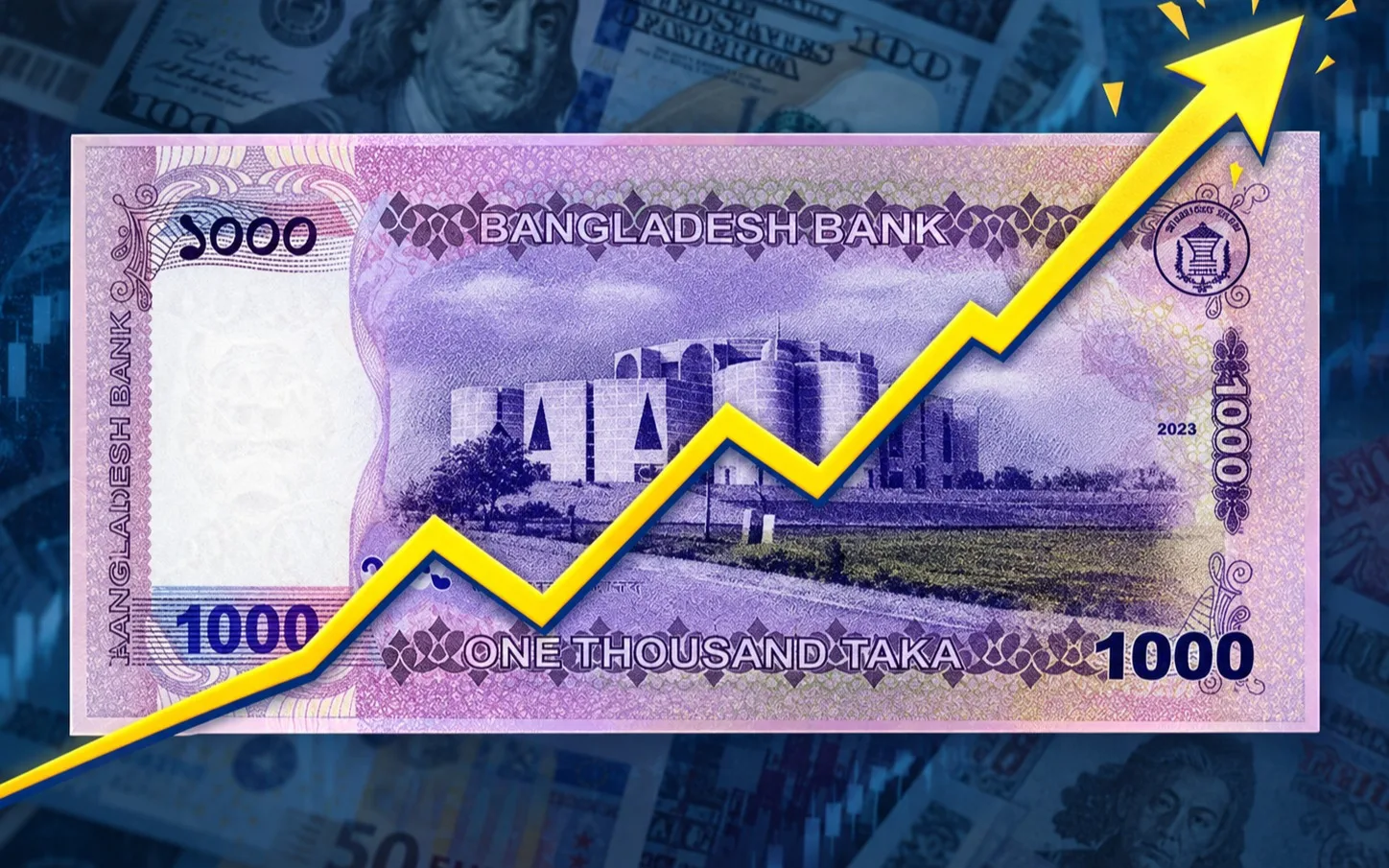
In a Nutshell:
- The taka, which appreciated 0.06% against the US dollar between June 2025 and June 2026, has strengthened another 0.77% between August 30 and September 17, 2026.
- The dollar rate fell from Tk123.95 to Tk123.00 during that period.
- Bangladesh received $7.702 billion in remittances between July 1 and September 19 of FY2026-27, up 13.8% from the same period a year earlier.
- Gross foreign exchange reserves stood at $36.44 billion on September 8, according to Bangladesh Bank.
- Bangladesh Bank said stronger remittance inflows, improved dollar liquidity and closer monitoring of foreign exchange transactions have helped strengthen the external position.
Context
Before the recent recovery, the taka had been under sustained pressure since 2021 as the dollar became more expensive. The exchange rate rose from Tk85.80 per dollar in 2021 to Tk123.95, increasing the cost of imports and putting pressure on businesses and consumers. The recent change has come alongside stronger remittance flows and a rise in foreign exchange reserves. Remittances reached $2.86 billion in July and $2.97 billion in August, showing continued growth in the formal flow of foreign currency into the country.
Why It Matters
For Bangladesh, fuel, food, industrial raw materials and machinery are heavily linked to international prices and dollar payments. Therefore, the recent reduced exchange rate directly reduces the amount of local currency needed to pay for imports which may help reduce pressure on businesses and, in turn, ease some of the cost pressure passed on to consumers. Beyond immediate retail relief, this currency also drastically improves our capacity to handle external payments. Higher reserves and stronger dollar liquidity mean businesses can finally settle legitimate letters of credit smoothly, avoiding the crippling shortages witnessed during the peak of the foreign exchange crisis.
What We Think
While the taka's recent recovery, which is less than 1%, is a welcome change, having lost over 45% of its value during the steep depreciation cycle since 2021 makes it far too minor to celebrate prematurely. Moreover, for ordinary citizens, it is only a real relief if lower import bills actually bring domestic market prices down.