Five measures identified as necessary for resolving Rohingya crisis, PM tells UN
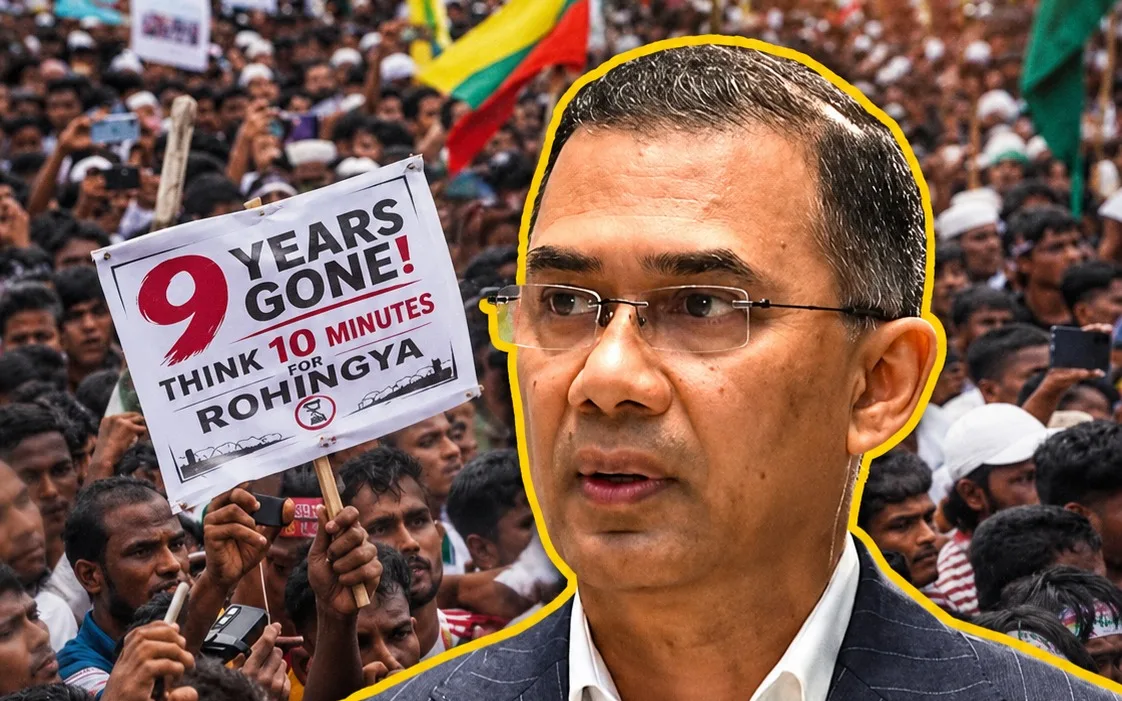
Addressing a high-level UN side event on September 23, Prime Minister Tarique Rahman identified five measures considered necessary for a durable Rohingya solution, with safe repatriation at the centre alongside calls for rights guarantees in Myanmar, accountability, sustained aid and action against cross-border crime. The proposal followed a September 22 meeting with UNHCR chief Barham Salih on the conditions required for voluntary return.
Reading
In a Nutshell:
- PM Tarique identified the need for an internationally backed roadmap for early, safe, voluntary, dignified and sustainable Rohingya repatriation to Myanmar.
- He identified an end to violence against Rohingyas and other civilians in Myanmar as necessary, with rights and security guaranteed before any return takes place.
- He identified predictable humanitarian support as required for more than 1.2 million Rohingyas and Bangladeshi host communities.
- He identified continued international support for accountability efforts through the International Court of Justice, International Criminal Court and other mechanisms as necessary.
- He identified stronger regional cooperation against human trafficking, drug trafficking, digital scams, illegal arms and other cross-border crimes as a needed measure.
Context
The September 23 proposal followed the September 22 meeting between Tarique Rahman and UNHCR chief Barham Salih, at which conditions for safe, voluntary and dignified return were discussed. Salih acknowledged Bangladesh's humanitarian role and stressed continued international support while repatriation remains unresolved. More than 750,000 Rohingyas fled to Bangladesh after Myanmar's 2017 military crackdown, joining earlier refugee populations already in the country. Return has remained stalled because conditions in Rakhine State have deteriorated. The Arakan Army now controls much of Rakhine, and reports indicate Rohingyas face insecurity linked to both the Myanmar military and the Arakan Army. UNHCR has stated that current conditions remain unsuitable for safe and sustainable return.
Why it matters
A key challenge facing the proposed return roadmap is that repatriation can no longer be negotiated between Bangladesh and Myanmar's central authorities alone, given that the Arakan Army controls much of the territory where Rohingyas would return. This armed group has also faced allegations of abuses, and UNHCR maintains that current conditions do not yet allow for safe and sustainable repatriation. The cost of continued delay is also becoming clearer for all parties involved. UNHCR projects Bangladesh's Rohingya population could exceed 1.4 million by 2029 without organised voluntary returns, at a time when funding shortages are already forcing humanitarian agencies to target assistance more selectively. This combination points to a larger refugee population being supported with comparatively fewer resources unless conditions change.
What we think
Look at what's actually being asked here: the five measures work less like a finished repatriation plan and more like a wish list aimed at everyone but Bangladesh itself. Rakhine's conditions, accountability for abuses, and the funding to keep over a million refugees supported are not things Dhaka can fix on its own, so the roadmap is really an attempt to get outside actors to own problems Bangladesh has been carrying alone. But there's a gap that's hard to ignore. The proposal talks about Myanmar's authorities, yet the Arakan Army is the one actually running much of Rakhine right now, the very territory Rohingyas would need to return to. Skip that piece, and the roadmap risks addressing a government that doesn't fully control the ground reality it's meant to change.