US seeks 'AI dialogue' with China before Trump-Xi summit
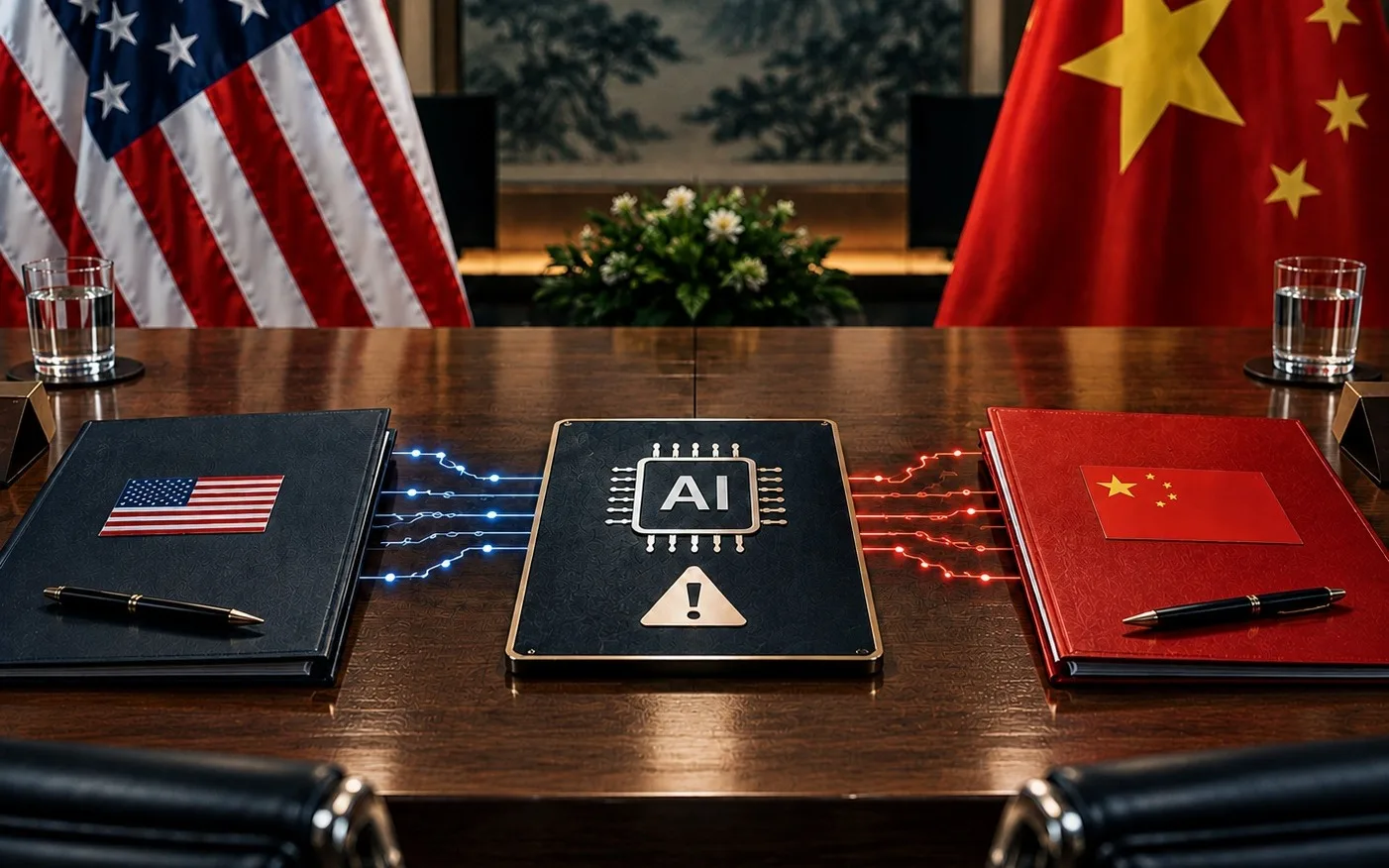
The US has proposed a mechanism with China for notifying each other about serious AI incidents that could raise national security concerns. The new proposal comes ahead of next week’s US-China Summit where President Xi Jinping and US President Donald Trump are expected to majorly focus on improving AI cooperation as part of their bilateral discussion.
In a Nutshell:
- Treasury Secretary Scott Bessent announced a US-China AI dialogue with a notification system for serious incidents that could raise national security concerns and said it was important to have “more transparency between the number one and number two AI powers in the world”.
- US Trade Representative Jamieson Greer said the proposed mechanism would not cover US controls on advanced AI chips or semiconductor manufacturing equipment.
- The talks also covered lower tariffs for selected non-strategic goods, including possible Chinese exports of consumer and low tech goods and US exports of energy, agricultural products and medical devices.
- Trump and Xi are scheduled to meet in Washington next week, while their current trade truce, reached in October last year, is due to expire on November 10, 2026.
- Nvidia CEO Jensen Huang and OpenAI CEO Sam Altman are among technology leaders expected at next week’s White House dinner for Xi, along with Apple CEO Tim Cook, Amazon founder Jeff Bezos, Tesla and SpaceX CEO Elon Musk and Google CEO Sundar Pichai.
Context
AI is becoming a regular part of high level US China diplomacy. Trump and Xi agreed in May to establish an AI consultation forum, and the latest talks have now produced a more specific proposal for notifying each other about serious AI incidents. The proposal comes as China and the US compete over increasingly capable systems, while Washington restricts China's access to advanced chips used to develop them. The technology will also have an unusually visible presence around next week's summit. The expected White House dinner brings together executives from the companies leading the US AI industry, including Nvidia and OpenAI. US developers have been under pressure to keep advancing quickly to catch up with China in the race. Trump especially has kept the pressure on for US companies to keep moving ahead of China, while Nvidia's Huang has also argued that the US should move as fast as possible despite calls from leading officials at AI companies to slow down development and prioritise safety.
Why it matters
This round of talks shows how important strategic AI coordination is becoming in the US-China relationship. While both countries are openly in an AI race, it will be interesting to see whether they can keep a conflict of interests from compromising the dialogue which they say is meant to prevent nation-wide security crises from AI incidents. To ensure a fair and successful partnership on managing AI security threats, the US and China will need to identify and outline the exact areas they will be working on together. The public also has many concerns around AI overtaking humanity due to recent warnings sounded by officials such as a former security researcher at Anthropic. This new proposal should therefore publicly announce some of the key details of what will be done to improve AI guardrails to maintain public transparency.
What we think
This AI safety proposal is a solid start, but it relies on the US and China actually swallowing their pride to admit their own system flaws. By ignoring the fierce chip war, they're just agreeing to manage disasters rather than stop the underlying tech arms race. It's a convenient band-aid that keeps talks alive but completely ignores the root cause of their security fears.