Bangladesh’s Aviation Diplomacy Gains Altitude with Cox’s Bazar–Penang Plan
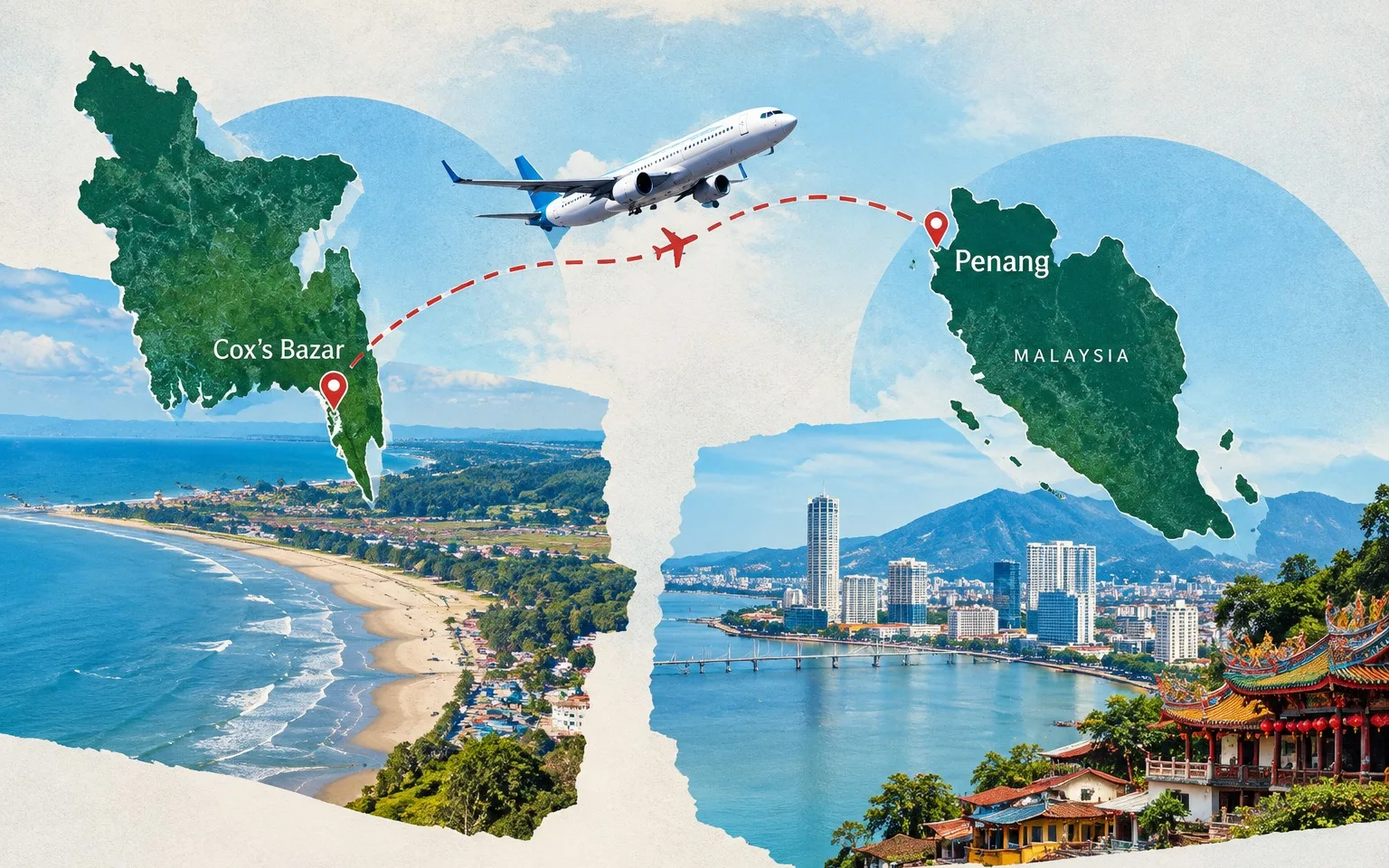
AirAsia has confirmed plans for a direct Cox’s Bazar–Penang service, though no launch date or frequency has been announced.
Reading
In a Nutshell:
- Civil Aviation and Tourism Minister M Rashiduzzaman Millat outlined the planned AirAsia service and wider internationalisation plans for Cox’s Bazar in comments to BSS.
- AirAsia has confirmed plans for a direct Cox’s Bazar–Penang service, though no launch date or frequency has been announced.
- The government plans to inaugurate Cox’s Bazar International Airport in October, with Prime Minister Tarique Rahman expected to lead the ceremony.
- Authorities are also exploring direct Cox’s Bazar links with Kathmandu, Kunming and Middle Eastern destinations.
- Cox’s Bazar’s new passenger terminal has begun domestic operations under a transitional arrangement ahead of international services.
- The Tk 362.63 crore terminal covers about 17,956 square metres and is designed to raise annual passenger capacity from roughly 730,000 to 1.8 million.
- The airport runway has been extended to 10,700 feet, making it Bangladesh’s longest and enabling wide-body aircraft operations.
- Tourism-sector representatives identify scheduled airline commitments, competitive airport charges and stronger destination development as central to commercial viability.
Context
Cox’s Bazar is Bangladesh’s flagship beach-tourism destination, but its visitor economy has historically relied overwhelmingly on domestic travellers. The airport expansion is intended to change that model by creating direct international access rather than requiring foreign visitors to transit through Dhaka. The project combines a new terminal, immigration and passenger-processing facilities, and a longer runway designed for larger aircraft. Its immediate operational model keeps domestic and international traffic partly separate, allowing international activity to begin while the airport continues to serve its existing domestic market.
Why It Matters
AirAsia’s interest matters because an international airport becomes valuable only when airlines run regular, profitable flights. A Cox’s Bazar–Penang route could bring the resort city closer to Malaysia’s tourism and business market, while giving travellers another option beyond transiting through Dhaka. This also fits into Bangladesh’s wider aviation push. Biman has committed to buying 25 Boeing aircraft and is pursuing 10 Airbus jets, potentially creating a 35-aircraft expansion pipeline for long-haul and regional services. These deals reflect more than fleet growth: they strengthen commercial ties with both the United States and Europe while giving Bangladesh more scope to expand air links. Cox’s Bazar can benefit as a second international gateway, particularly for tourism. But bigger terminals and longer runways alone do not fill planes; sustained demand, efficient immigration, competitive fees, reliable ground handling and a better visitor experience remain decisive.
What We Think
Bangladesh is using aviation as both an economic and diplomatic tool. The Boeing purchases have coincided with efforts to deepen trade ties with the United States, while the planned Airbus deal keeps Europe engaged and avoids dependence on a single manufacturer. This can help Biman build a more flexible network, using wide-body aircraft for longer routes and narrow-body jets for high-frequency regional services. The hub's ambition is realistic only if aircraft orders, route planning, and airport investment in Bangladesh also face strong competition from established regional hubs such as Kolkata, Delhi, Kathmandu, Kuala Lumpur, Singapore, and Gulf airports. Its edge lies in its location, a growing passenger market, lower operating costs, and potential demand for tourism and cargo.