Why Dope Tests Should Not Be Mandatory for Candidates in National and Local Elections
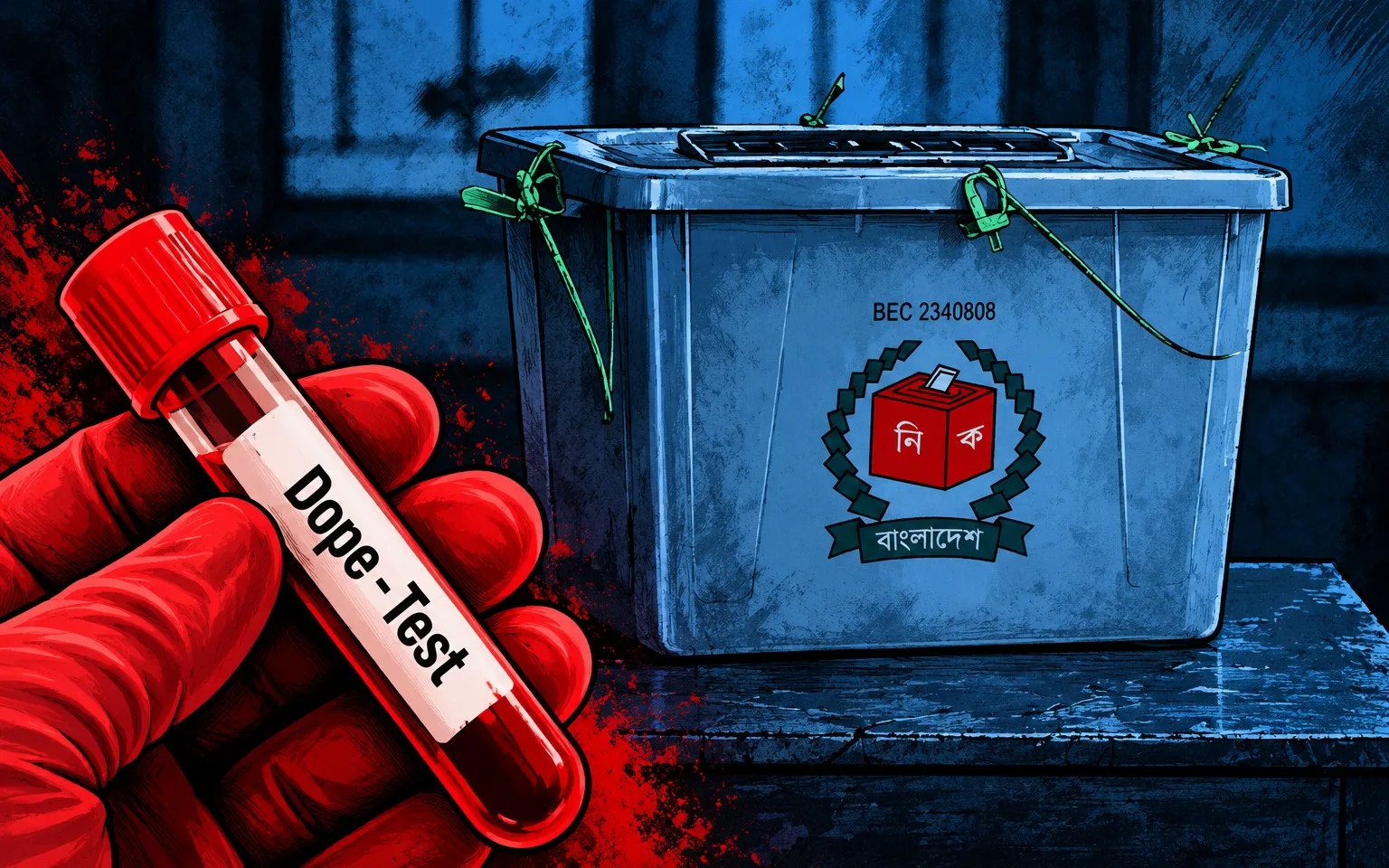
The High Court has asked why dope tests should not be mandatory for candidates in national and local elections. The petition points to requirements already imposed on government job applicants and professional drivers and argues that elected representatives should not be exempt.
Reading
In a Nutshell
- The High Court has asked why election candidates should not undergo dope tests and why those who test positive or refuse testing should not be barred from contesting.
- The writ argues that exempting lawmakers and elected representatives from dope testing violates Article 21(1) of the Constitution.
- Seven officials, including the chief election commissioner, cabinet secretary, law secretary and director general of the Department of Narcotics Control, have been asked to respond.
- The petition followed a legal notice sent on August 16, after which Supreme Court lawyer Israt Jahan Ony filed a public interest litigation over the authorities’ inaction.
Context
Bangladesh moved to introduce dope testing for government job applicants in 2018 after the High Court asked why it should not be compulsory. The Directorate General of Health Services subsequently directed government hospitals to include the test in recruitment procedures. Police recruits and serving members suspected of drug use have also been tested.
For professional drivers, the requirement became formal through the Bangladesh Road Transport Authority. Since 2022, applicants for new and renewed professional driving licences have needed negative dope test reports. The broader government recruitment system, however, has faced shortages of testing facilities and questions over implementation. The Department of Narcotics Control proposed 22 laboratories, while a government evaluation committee later recommended making testing a permanent function of the department instead of creating a separate project.
Why It Matters
The existing rules cover people entering government service and those seeking professional driving licences, but election candidates face no comparable requirement. The writ argues that this distinction conflicts with Article 21(1), which requires citizens and public servants to abide by the Constitution and the law.
The proposed change would also put the test directly into the nomination process. A positive test result or refusal to undergo testing could serve as grounds for rejecting a candidacy.
What We Think
The High Court has not ordered testing for candidates. It has asked the authorities to explain why the relevant laws and rules should not be amended, leaving the court to decide whether dope testing can become a condition for contesting elections. If it does, it will be important to ground it in a sustainable legal framework. The rules would have to set out who conducts the tests, when candidates take them, how a positive result can be challenged and whether refusing the test itself means losing eligibility.