Reading
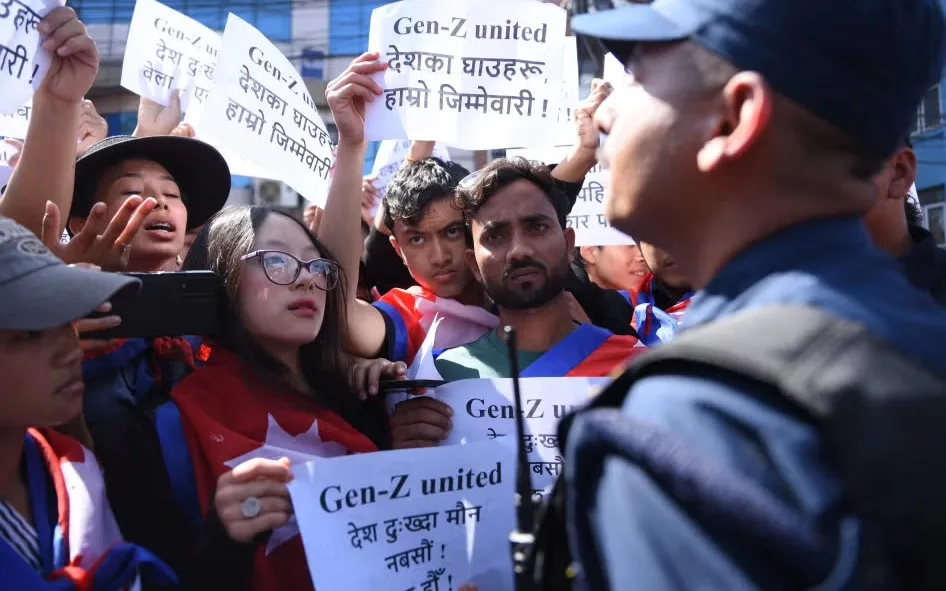
Recently, Kathmandu has seen isolated pockets of demonstrations, leading some international observers to assume the city is engulfed in a massive youth-led uprising. However, the ground reality is quite different. To understand the actual situation, I recently interviewed Kosh Raj Koirala, editor of Republica Daily in Kathmandu. During our conversation, I learned the capital is not experiencing city-wide breakdowns or massive unrest. Instead, fragmented protests are largely limited to specific interest groups with distinct socio-economic demands that have not merged into an organized anti-government movement. The timeline of these demonstrations traces back to a tragic catalyst a few weeks ago. A ride-hailing motorcyclist named Ganesh Nepali was parked on the roadside when he was abruptly issued a fine by the Kathmandu Metropolitan City Police. This led to a heated verbal altercation. Overwhelmed and distressed, he poured petrol over his body and attempted self-immolation. He later succumbed to his burn injuries while undergoing treatment, an event that shocked the public and prompted city authorities to alter their policing approach to avoid further escalation. Following this tragedy, public anger temporarily swelled, compounded by new economic and social grievances. The administration had recently introduced its budget, imposing a controversial 3% equity tax on private education and healthcare alongside a new Value Added Tax on electricity bills. Because many citizens rely on private schools and hospitals due to inadequate public services, the tax was widely seen as an unbearable burden. Public outrage also grew over a demolition drive that forcibly evicted many landless settlers and squatters across the Kathmandu Valley. These pressures brought people to the streets, demanding a rollback of the taxes, an end to heavy-handed policing, and proper land rehabilitation for the displaced. While the initial outcry drew significant attention, the protests have since fragmented into smaller gatherings centered around Maitighar. These demonstrations are led by separate interest groups with localized demands. Sugarcane farmers are demanding overdue payments from mill owners, victims of loan sharks are seeking state intervention, and contract bureaucrats have protested sudden job terminations. None of these groups operate under centralized leadership, keeping the demonstrations isolated from one another. Currently, the situation has largely de-escalated as the government works to address these demands. Prime Minister Balendra Shah announced the withdrawal of the controversial equity tax on health and education, saying his administration is ready to listen and adapt. The government has also formed a probe committee into the driver's death, while city and federal traffic police have adopted a more restrained approach. Officials are negotiating with squatter groups, promising land to genuine settlers in their home districts. Traditional opposition parties have struggled to capitalize on the unrest because of their unpopularity among young voters. As the government continues addressing these localized grievances, the protests are expected to gradually dissipate. The recent unrest in Nepal is particularly relevant to Bangladesh because both countries are navigating similar challenges. Following major political transitions, Nepal elected a Gen Z-backed government led by Prime Minister Balen Shah, while Bangladesh returned leadership to the BNP, an established political party. Despite choosing different political paths, both countries face the same challenge: a public demanding real solutions. Both governments are taking steps to address these issues and restore stability. Whether these efforts ultimately succeed remains to be seen. I will continue exploring this story by speaking with researchers, politicians, and opposition figures in Nepal.