G7 Releases Oil Reserves, but Will Relief Reach Beyond Its Members?
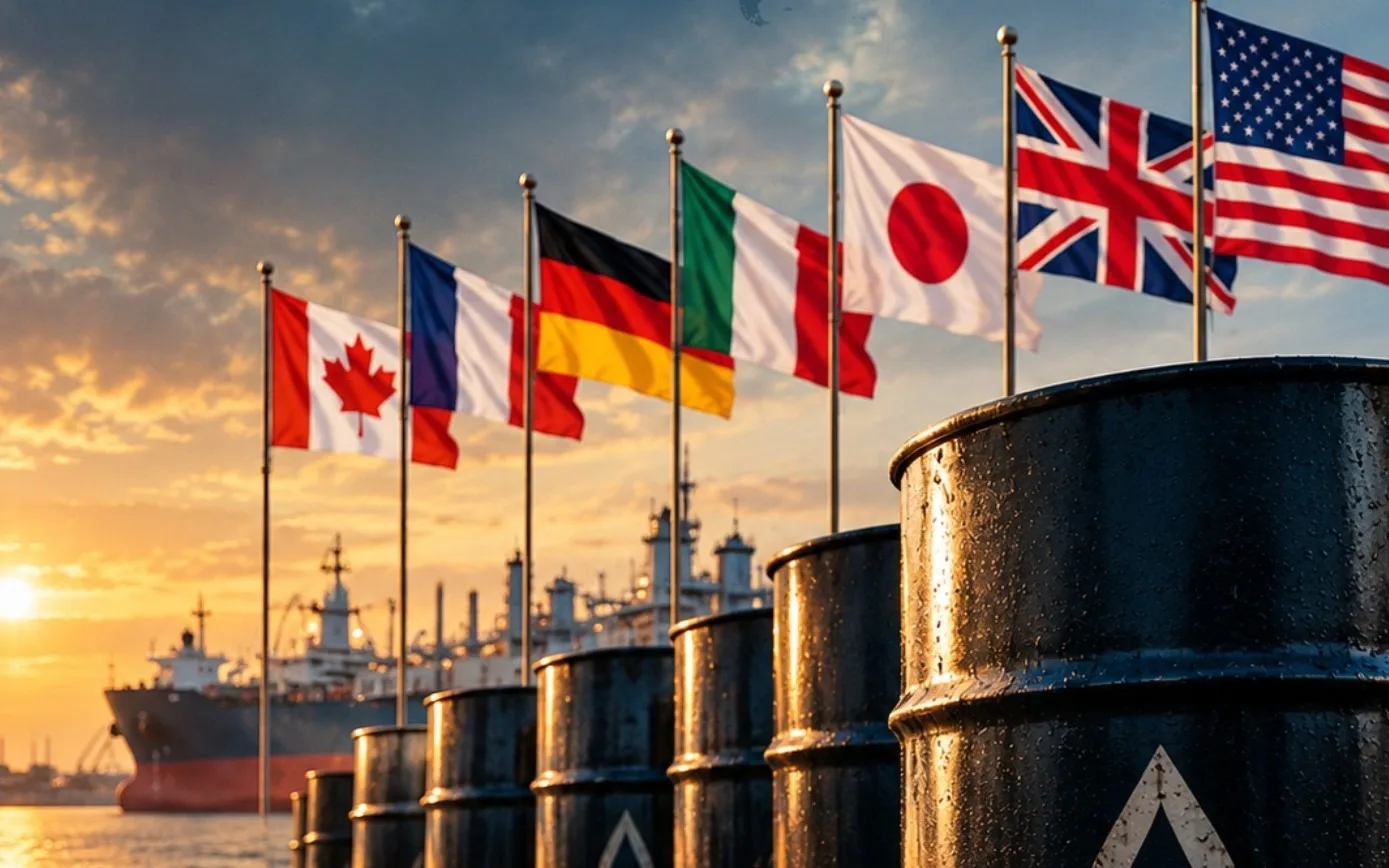
Following soaring fuel prices linked to the US-Israeli war with Iran and a US threat to restrict diesel exports, the G7 countries have agreed to release 100 million barrels of crude oil and diesel over four months to ease supply concerns.
Reading
In a Nutshell
- The G7 countries said the release will begin immediately through the International Energy Agency, with a substantial front-loading of diesel in the first 20 days.
- The seven countries also pledged not to restrict energy exports among themselves and urged other producers to avoid bans that could worsen market tensions.
- US President Donald Trump said the United States will not impose the diesel export ban he had threatened.
- Diesel prices in the US and Europe have hit record highs in recent weeks, adding to inflationary pressure.
Context
The Group of Seven (G7) is an intergovernmental political and economic forum consisting of Canada, France, Germany, Italy, Japan, the UK, and the US. Additionally, the European Union (EU) is a “non-enumerated member”. It is organised around the shared values of pluralism, liberal democracy and representative government.
The recent agreement followed a video conference chaired by French President Emmanuel Macron, after Washington pressed European governments to release strategic reserves. It comes amid energy-market disruption linked to the war with Iran and Russia’s export ban on diesel in response to Ukrainian attacks on fuel facilities. The IEA coordinated the release. Its member countries had already agreed in March to release 400 million barrels of oil from reserves, which the agency described as its largest release ever.
Why It Matters
The G7's emergency oil release provides temporary supply relief to ease immediate market pressures. However, it is a short-term \ temporary response to a crisis driven by conflict and restrictions on trade rather than structural stability.
Moreover, for import-dependent countries like Bangladesh, higher global prices raise import costs and put more pressure on households, businesses and foreign-exchange reserves, whereas the G7’s promise not to restrict exports applies only to its own members. This leaves other countries exposed to sudden changes in global supply.
What We Think
Emergency reserves mainly protect wealthy countries, while developing countries that depend on imports are still exposed to major price shocks. Releasing extra supplies, such as 100 million barrels of crude oil and diesel, for a short time does not solve long-term energy dependence or conflicts between countries.