US Acknowledges Weapons in Orbit for the First Time
For the first time, the United States has publicly acknowledged deploying “space-control weapons” in orbit, without revealing what they are or how many are operational. The announcement has brought renewed attention to the growing military competition in space and to the gaps in international rules governing conventional weapons in orbit.
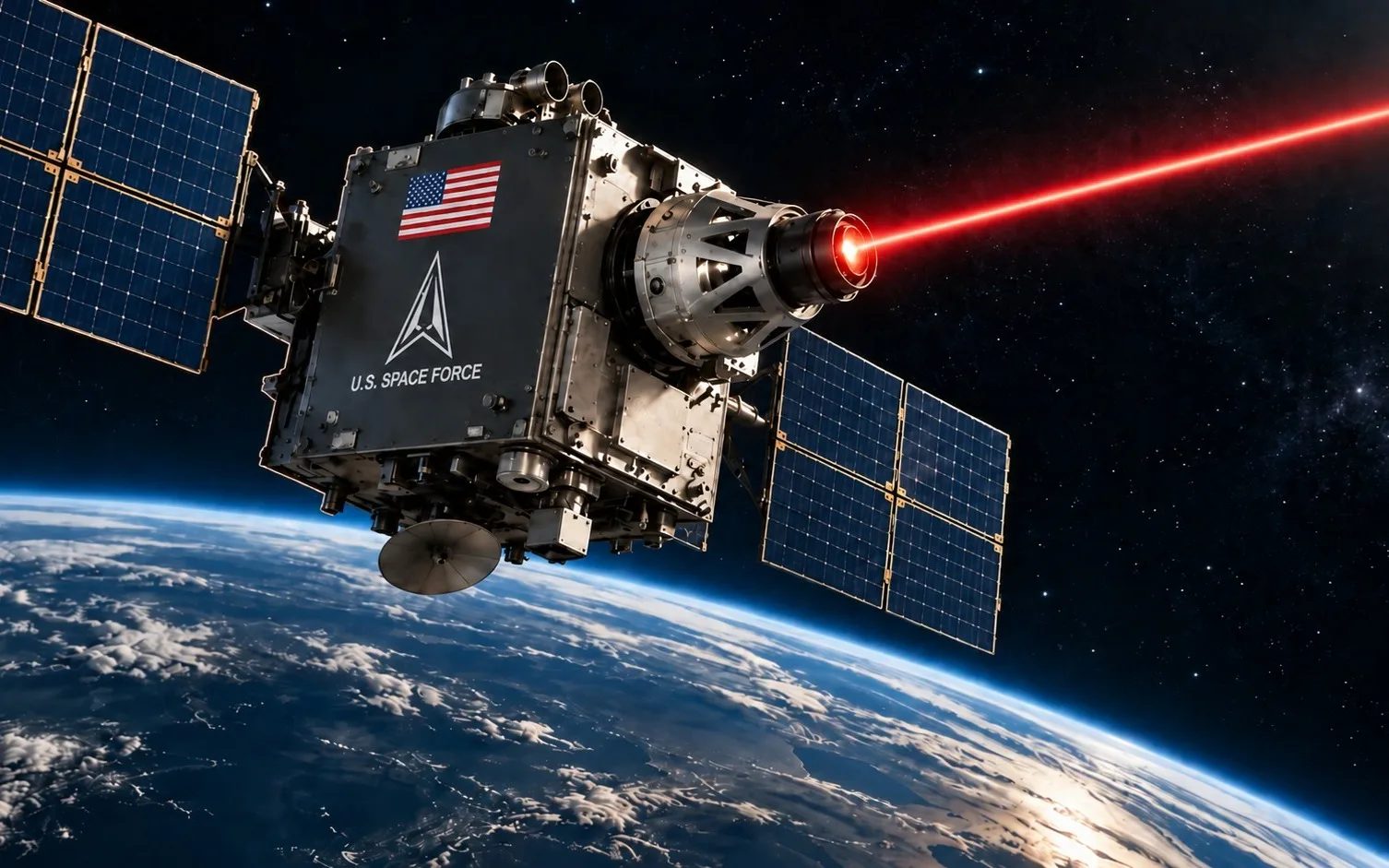
In a Nutshell
- US Air Force Secretary Troy Meink said on September 14 that the US now has “on-orbit space-control weapons” capable of defending American forces against hostile action.
- Washington has not disclosed the number, location or specific capabilities of the weapons yet.
- Possible space-control systems include jammers, laser-based systems and other non-kinetic weapons, while kinetic anti-satellite weapons could physically destroy satellites. The US has not confirmed which of these are deployed.
- At the same time, China has accused Washington of preparing for war in space and warned against turning outer space into a battlefield or starting an arms race there. Russia has also called for space to remain free of weapons.
- The 1967 Outer Space Treaty prohibits nuclear weapons and other weapons of mass destruction from being placed in orbit, but does not impose a blanket ban on conventional weapons in Earth orbit.
- The US, Russia and China already possess or are developing various counterspace capabilities, including systems designed to jam, disrupt or potentially destroy satellites.
Context
Militaries have used space for a long time. They rely on satellites for communication, spying, and navigation. However, the United States recently made a major announcement, saying it already has "space-control weapons" operating in orbit. The US kept the technical details a secret, but experts believe these weapons fall into two categories. First, "non-kinetic" weapons, like signal jammers or lasers that can blind or silence an enemy satellite without touching it. Second, "kinetic" weapons that physically smash into targets to destroy them.
Right now, there is no proof that the US is using kinetic weapons. Still, this public admission turns space from a hidden support zone into a confirmed military zone.
Why It Matters
This new reality matters for two main reasons: outdated laws and civilian safety. First, international law has a major loophole. The 1967 Outer Space Treaty bans nuclear weapons in space, but it does not explicitly ban conventional weapons in orbit. This gap creates scope for modern space warfare to grow unchecked.
Second, space is not just for superpowers anymore. Every day, people rely on satellites for weather forecasts, disaster alerts, and internet access. For example, Bangladesh uses its Bangabandhu Satellite-1 to connect remote areas. If space weapons disrupt or destroy satellites, the damage will not just hurt military targets. It will cut off vital services for civilians worldwide.
What We Think
For decades, countries have quietly militarised space. Now, they are treating space as an open battlefield, and it is a fact that space warfare does not need huge explosions to cause massive harm. Just blocking a few satellite signals can create chaos on Earth. Worse, physical attacks will leave flying debris that puts every nation's space tools at risk.