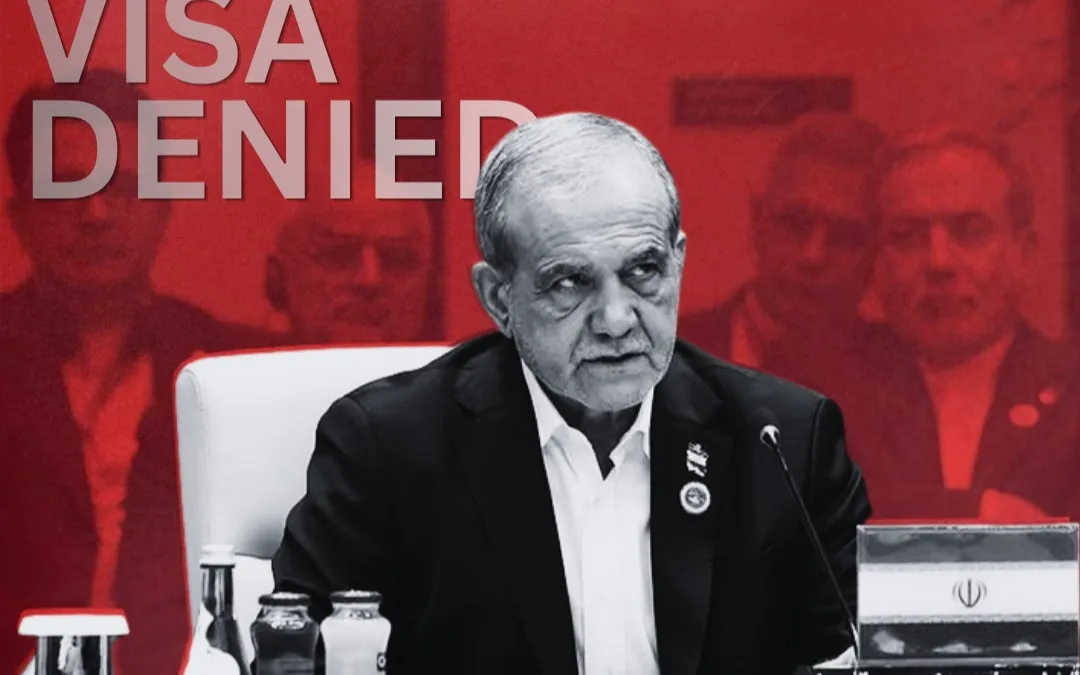
US Denies Visa to Pezeshkian’s UN Delegation
The US has denied visas to members of Iranian President Masoud Pezeshkian’s UN delegation, including his communications team, while allowing Pezeshkian and Foreign Minister Abbas Araghchi to attend the General Assembly.
In a Nutshell:
- On September 21, Iranian state media reported that the US had denied visas to members of Pezeshkian’s delegation, including his communications team.
- Pezeshkian is due to address the UN General Assembly on September 23, while Foreign Minister Abbas Araghchi is already in New York.
- On September 17, the US said Iran’s delegation could attend the General Assembly but would face restrictions on movement and purchases in New York.
Context
The US had already approved Pezeshkian and Araghchi for the General Assembly under its obligations as host of the UN. Washington is nevertheless limiting the delegation’s size and movement, with members restricted largely to the UN, Iran’s mission, the ambassador’s residence and the airport. This is also a continuation of last year’s restrictions on Iranian officials in New York. The State Department has again barred the delegation from buying luxury goods and other items, while imposing limits on where they can travel.
Why it matters
Pezeshkian is the highest ranking Iranian official to enter the US since the war began with US and Israeli strikes on Iran in February. His planned speech comes while Tehran is using Qatar to communicate conditions for reopening the Strait of Hormuz, giving his UN appearance a direct connection to the conflict’s diplomatic and economic fallout. The US has therefore allowed Iran’s president and foreign minister to make their case at the UN while limiting the wider team that accompanies them. That distinction matters because Pezeshkian’s stated purpose for the trip is to present Iran’s position to the international community.
What we think
Denying visas to the communications team is especially pointed out because Tehran says the purpose of the visit is to present its position internationally. Washington is not blocking Iran completely from a UN platform, but is making operations much harder for Iran’s delegation. In an active war, the UN is one of the few places where Tehran can put its account of the conflict directly before governments from around the world, and Washington is narrowing that space while still meeting its obligation to let Iran’s senior officials appear.